Types of Passports in the U.S.: Complete Guide to Every Category
The United States issues five official types of passports: Regular, Official, Diplomatic, Service, and Emergency, plus a separate passport card for land and sea travel. The Department of State assigns each type based on who the traveler is and why they’re crossing a border, not on personal preference. A tourist and a foreign service officer never carry the same document, even when both are flying on the same plane to the same city.
This guide breaks down every category, what each one costs, how long it stays valid, and which one actually applies to a given traveler.
The Five Passport Types
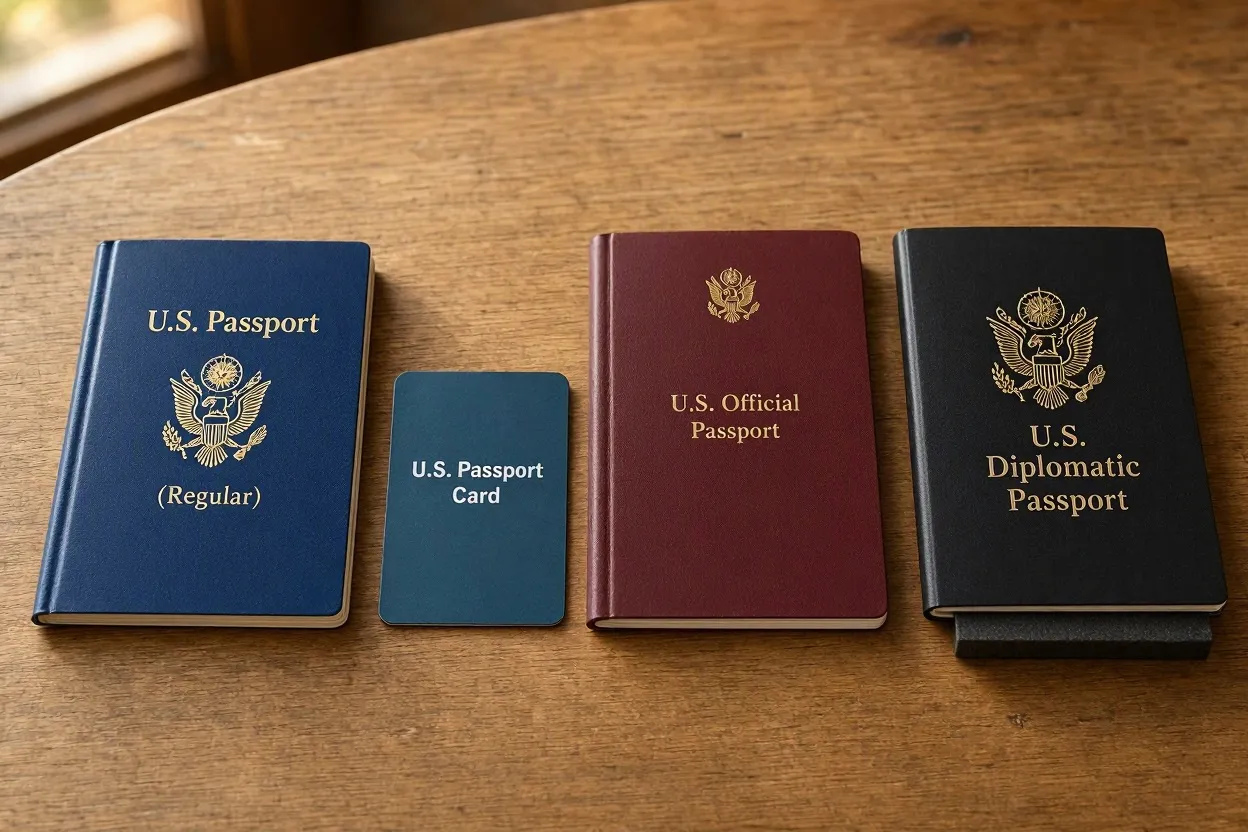
The Department of State issues five passport types: Regular (blue), Official (maroon), Diplomatic (black), Service (gray), and Emergency (purple). Each color corresponds to a specific class of traveler and carries different privileges at foreign borders.
A Regular passport works for tourism, business, and study. A diplomatic passport signals to foreign customs officials that the bearer represents the U.S. government at the ambassadorial level, and border agents in most countries treat that distinction seriously. Knowing which category applies before filing an application saves weeks of processing delays. Misfiling a Diplomatic or Official application when a Regular passport is what’s needed gets the paperwork kicked back, restarting the clock on processing time.
Diplomatic, Official, and Service passports aren’t requested directly by the traveler. A sponsoring federal agency submits the request on the employee’s behalf to the State Department’s Special Issuance Agency, which handles all government-travel-document issuance in Washington, D.C. That step has no equivalent in a standard Regular passport application.
Beyond the five color-coded types, the passport card exists as a sixth practical document, though the State Department classifies it separately since it isn’t a full passport book. Roughly 1.7 million passport cards were issued in fiscal year 2024 alongside more than 24.5 million passport books, according to Bureau of Consular Affairs reporting.
Regular Passport (Blue Cover)
The Regular passport is the standard travel document issued to U.S. citizens and non-citizen U.S. nationals for personal and business travel. Roughly 143 million of these were in circulation as of fiscal year 2024, according to State Department reporting. This is the document nearly every American traveler holds, covering everything from a two-week vacation in Portugal to a semester studying abroad in Japan.
Eligibility requires proof of U.S. citizenship (a certified birth certificate, Certificate of Naturalization, or a previous U.S. passport) along with valid photo identification and a passport photo meeting strict size and background rules. Adults 16 and older receive a 10-year validity period; applicants under 16 get 5 years, since minors’ appearances change faster.
First-time applicants must file Form DS-11 in person at an acceptance facility. A college student applying before a study-abroad program, for example, must show up with original documents rather than mailing anything in. Renewal applicants can use the mail-in Form DS-82 instead, if the previous passport was issued after age 16, within the last 15 years, and undamaged.
The blue cover has stayed consistent since 1976, adopted for the U.S. bicentennial. One exception: a brief green run occurred between April 1993 and March 1994, honoring the 200th anniversary of the Consular Service. The current Next Generation Passport design, phased in starting March 2021, replaced the earlier 2007 biometric design across all Regular passport books issued after November 2022. (More on what’s actually different about it below.)
Official Passport (Maroon Cover)
The Official passport goes to U.S. government employees and their immediate family members traveling abroad for government business, not personal travel. A federal employee posted to an embassy for a two-year work assignment carries this document instead of a Regular passport for the duration of that posting.
Validity runs shorter than a Regular passport, typically capped at 5 years, and the document must be surrendered when the assignment ends. Using an Official passport for a personal vacation violates its terms, so the holder needs a separate Regular passport for that trip. Family members traveling with the employee sometimes qualify for their own Official passports too, depending on the posting and the sponsoring agency’s approval.
Diplomatic Passport (Black Cover)
The Diplomatic passport is issued to ambassadors, career diplomats, and other officials who hold diplomatic status while representing the United States overseas. It confers diplomatic immunity and specific border privileges recognized under international protocol, distinct from anything available to Regular or Official passport holders. A U.S. ambassador stationed in Berlin, for instance, moves through customs under protections that a Regular passport doesn’t provide.
Diplomatic couriers (officials who physically transport sensitive government material between embassies) often carry multiple valid Diplomatic passports at once, one for each set of visas required across different countries on their route. More than one valid passport generally isn’t allowed for the same person, but the State Department routinely authorizes exceptions for Diplomatic passport holders who also carry a Regular passport, letting a diplomat travel personally on the Regular document while reserving the Diplomatic passport strictly for official duty.
Congress members, high-ranking federal officials, and Peace Corps volunteers sometimes qualify for related no-fee travel documents, though eligibility depends on the specific role and mission rather than rank alone.
Service Passport (Gray Cover)
The Service passport is a less common category issued to certain government-affiliated personnel who don’t meet the criteria for a Diplomatic or Official passport but still require government travel documentation. Fewer travelers hold this passport type than any other category in the five-tier system. Someone working under a specific interagency arrangement, or a contractor tied to a government travel assignment, might receive a Service passport rather than an Official one, depending on the nature of the work. Border treatment for Service passports resembles that of Official passports in most countries.
Unlike a Service passport, an Emergency passport isn’t tied to a category of traveler at all: it’s a fallback anyone can need, regardless of what type of passport they’d otherwise hold, when a situation demands immediate travel.
Emergency Passport (Purple Cover)
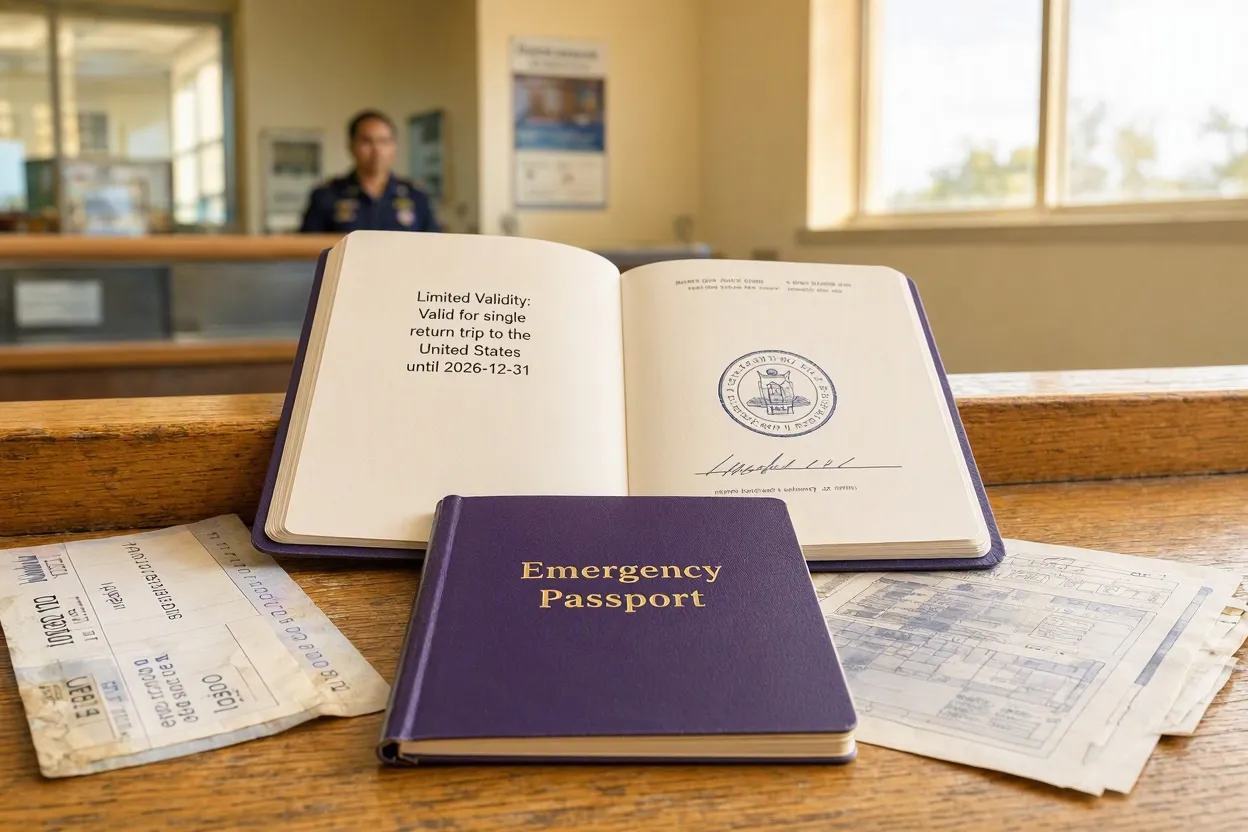
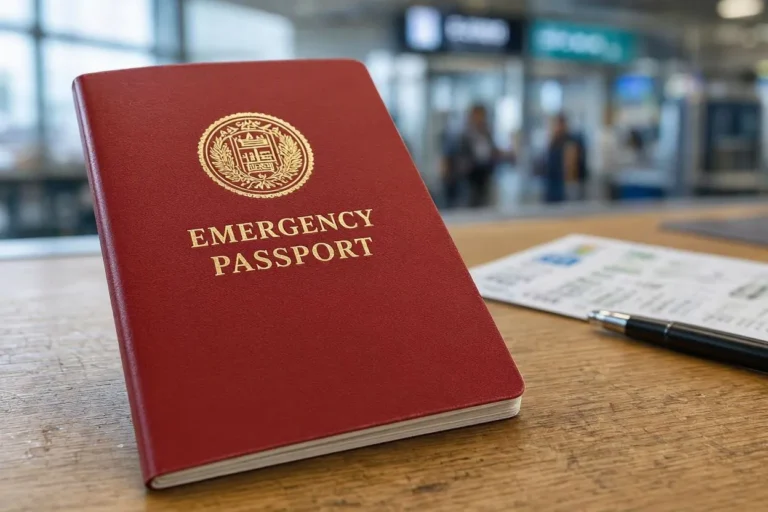
The Emergency passport is a limited-validity document issued by a U.S. embassy or consulate to citizens who need to travel immediately and can’t wait for standard processing. A traveler whose passport is stolen three days before an international flight home would request this document at the nearest embassy rather than starting a full DS-11 application from abroad. Someone stranded overseas after a natural disaster wiped out their travel documents represents exactly the scenario this category was built for.
Limited-validity endorsements typically accompany Emergency passports, restricting use to a specific date range or a single return trip to the United States. It isn’t meant as a long-term replacement. Travelers who receive one still need to apply for a standard Regular passport once they’re back on U.S. soil.
U.S. Passport Card vs. Passport Book
A passport card works only for land and sea entry from Canada, Mexico, the Caribbean, and Bermuda; it cannot be used for international air travel. The passport book permits travel to any country worldwide, subject to that country’s own visa rules.
Anyone eligible for a Regular passport book also qualifies for the card, and both can be held at the same time without restriction. A resident who crosses into Mexico every weekend, for example, might carry only the card for convenience while keeping the book on file for less frequent international flights.
Card validity matches the book: 10 years for applicants 16 and older, 5 years for minors. The card is Real ID Act compliant and works for domestic air travel identification, but a boarding pass for an international flight still requires the full passport book.
No-Fee Passports and Other Special Categories
No-fee passports are issued to specific groups of government personnel (including some federal employees, military members on official orders, and Peace Corps volunteers) who travel on behalf of the U.S. government without paying standard application fees. This category sits outside the five main color-coded types but overlaps functionally with the Official and Diplomatic categories, depending on the traveler’s role.
A second Regular passport is also available under narrow circumstances. Travelers facing a prolonged visa-processing delay, or those needing to visit a country that refuses entry to anyone with an Israel stamp in their passport, can request a second valid Regular passport. That second document generally carries a 4-year validity period (shorter than the standard 10 years given to a first passport) and the applicant must demonstrate the specific circumstance justifying the exception.
What’s Actually Different About the Next Generation Passport
Every U.S. passport book issued since August 2007 contains an embedded chip storing the holder’s photograph, biographical data, and a digital signature, shielded by a wire mesh so the passport must be physically opened before any reader can access the stored data. The Next Generation Passport, phased in starting in 2021, added a polycarbonate coating over the data page along with laser-perforated numbering and color-shifting ink. That makes a stolen passport much harder to alter than one with a simple printed photo. These upgrades apply across every type that uses the standard booklet format: Regular, Official, Diplomatic, and Service passports all share the same underlying security architecture, differing mainly in cover color and text.
What Documents Do You Need to Apply?
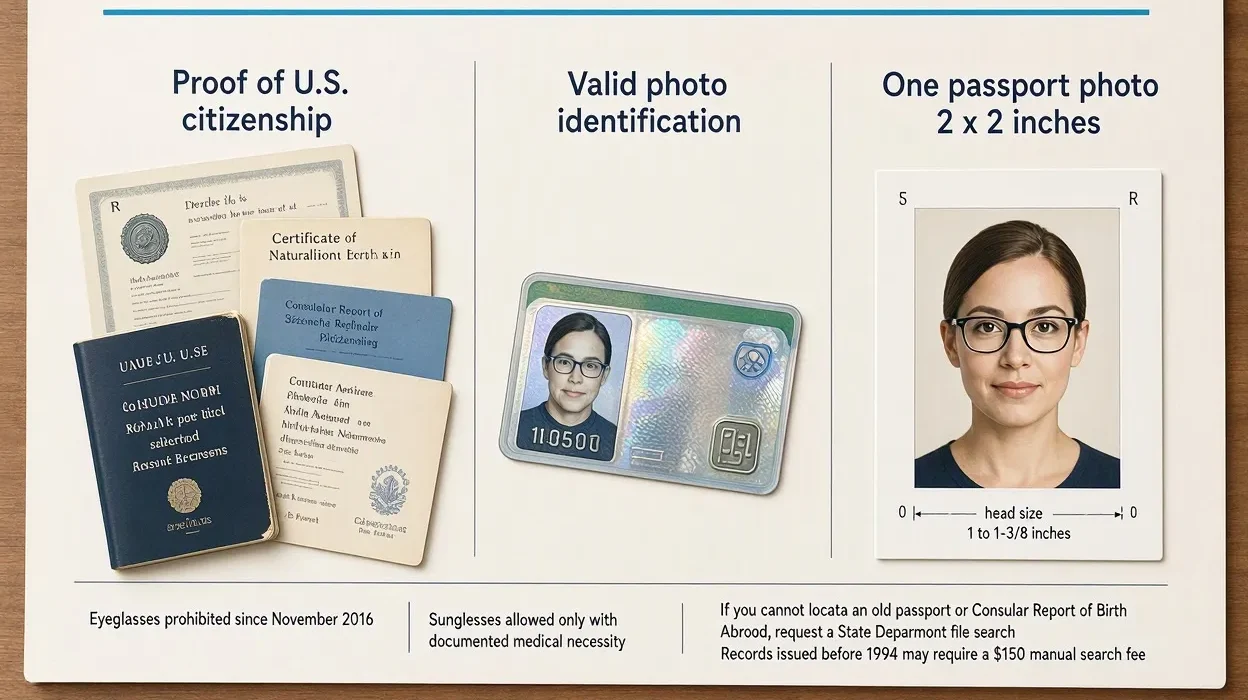
Every applicant needs proof of U.S. citizenship, valid photo identification, and one passport photo meeting the government’s exact size and composition standards. Proof of citizenship can take the form of a certified birth certificate, a Certificate of Naturalization, a Certificate of Citizenship, a Consular Report of Birth Abroad, or a previous U.S. passport that hasn’t expired more than five years ago.
The photo itself follows specific measurements: 2 x 2 inches, with the head measuring 1 to 1-3/8 inches from the top of the hair to the bottom of the chin. Eyeglasses have been prohibited in passport photos since November 2016, and sunglasses are only permitted with documented medical necessity. A plain white or off-white background is mandatory.
Applicants who can’t locate an old passport or Consular Report of Birth Abroad can request a State Department file search instead, though records issued before 1994 require a $150 manual search fee since those files were never digitized.
How Much Do the Different Types of Passports Cost?
Regular passport books cost $130 for first-time adult applicants, $100 for minors under 16, and $30 for a passport card filed alongside a book application. Official and Diplomatic passports carry no direct fee to the applicant, since a federal agency covers the cost as part of the employee’s assignment.
A $35 execution fee applies to every first-time Regular passport application, charged once per transaction even when applying for both the book and card together. That brings a first-time adult book total to $165. Renewals filed on Form DS-82 skip this fee entirely. Expedited service adds $60 to any application, and 1–3 day return shipping after processing runs an additional $22.05.
Local acceptance facilities (post offices, libraries, county clerk offices) frequently add their own processing fee on top of the federal amount, and that fee varies by location. Two applicants filing the identical DS-11 form in different counties can end up paying different total amounts once local fees are factored in, even though the federal fee itself stays fixed nationwide. Check with your specific acceptance facility for its local fee before applying.
How Long Does Each Passport Type Stay Valid?
Regular passport books and cards last 10 years for applicants 16 and older and 5 years for minors. Official passports max out at 5 years regardless of the holder’s age, tied to the length of the government assignment rather than a fixed calendar period.
Emergency passports carry the shortest validity window of any category, often just days or weeks, depending on the Limited Validity endorsement issued by the consulate. Diplomatic and Service passports vary case by case, set according to the length of the posting or interagency assignment rather than a standard term.
Passports can’t be extended past their printed expiration date through stamping or amendment. A traveler whose Regular passport expires mid-trip has no option except applying for renewal before departure or requesting a new document from a U.S. embassy while abroad.
How to Apply for the Right Passport Type
Most applicants need Form DS-11, filed in person at an acceptance facility. Adults renewing an existing Regular passport that was issued after age 16, within the last 15 years, and in undamaged condition can instead mail in Form DS-82 or renew online. The online system has now processed more than 7.3 million passports since its 2024 launch, with 94% of users rating it positively, according to May 2026 State Department reporting.
Government employees requesting an Official, Diplomatic, or Service passport skip the public acceptance facility entirely and go through the Special Issuance Agency instead (see above). Standard processing currently runs 4 to 6 weeks from the date the application arrives, not counting mailing time.
Common Mistakes When Choosing a Passport Type
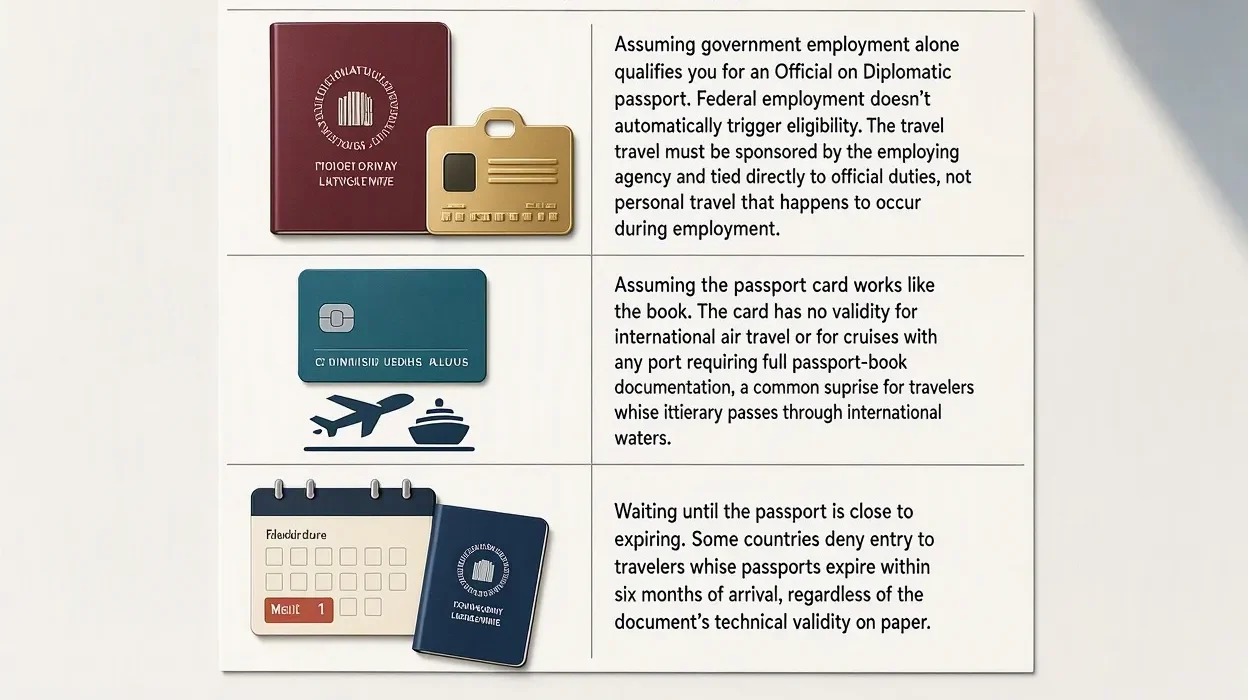
Assuming government employment alone qualifies you for an Official or Diplomatic passport. Federal employment doesn’t automatically trigger eligibility. The travel must be sponsored by the employing agency and tied directly to official duties, not personal travel that happens to occur during employment.
Assuming the passport card works like the book. The card has no validity for international air travel or for cruises with any port requiring full passport-book documentation, a common surprise for travelers whose itinerary passes through international waters.
Waiting until the passport is close to expiring. Some countries deny entry to travelers whose passports expire within six months of arrival, regardless of the document’s technical validity on paper.
Conclusion
Five official types of passports cover every category of U.S. traveler. A first-time tourist files Form DS-11 at a local library; a career diplomat carries multiple diplomatic passports for a single overseas posting. The passport card adds a practical sixth option for travelers who only need land or sea access to Canada, Mexico, the Caribbean, or Bermuda. Matching the right document to the right purpose before filing an application is what keeps processing times at 4 to 6 weeks instead of stretching into months of rejected paperwork.
FAQs

Michael Reynolds
Michael Reynolds leads immigration content at ImmigrationWin, covering visa requirements, application and relocation pathways. He researches immigration policies and official government guidance to explain changing rules clearly. His guides help students, families, and professionals make informed decisions about moving abroad.
Related Posts