Passport Book vs Passport Card: Which One Do You Need?
Choosing between a passport book and a passport card really comes down to one question: where are you actually going? The U.S. Department of State issues both to prove citizenship and identity, but they’re built for different jobs. The book covers every kind of international travel. The card only covers land and sea trips to a handful of nearby destinations. Here’s how they compare on cost, validity, size, and real-world use, so you apply for the right one the first time instead of guessing.
What Is the Difference Between a Passport Book and a Passport Card?
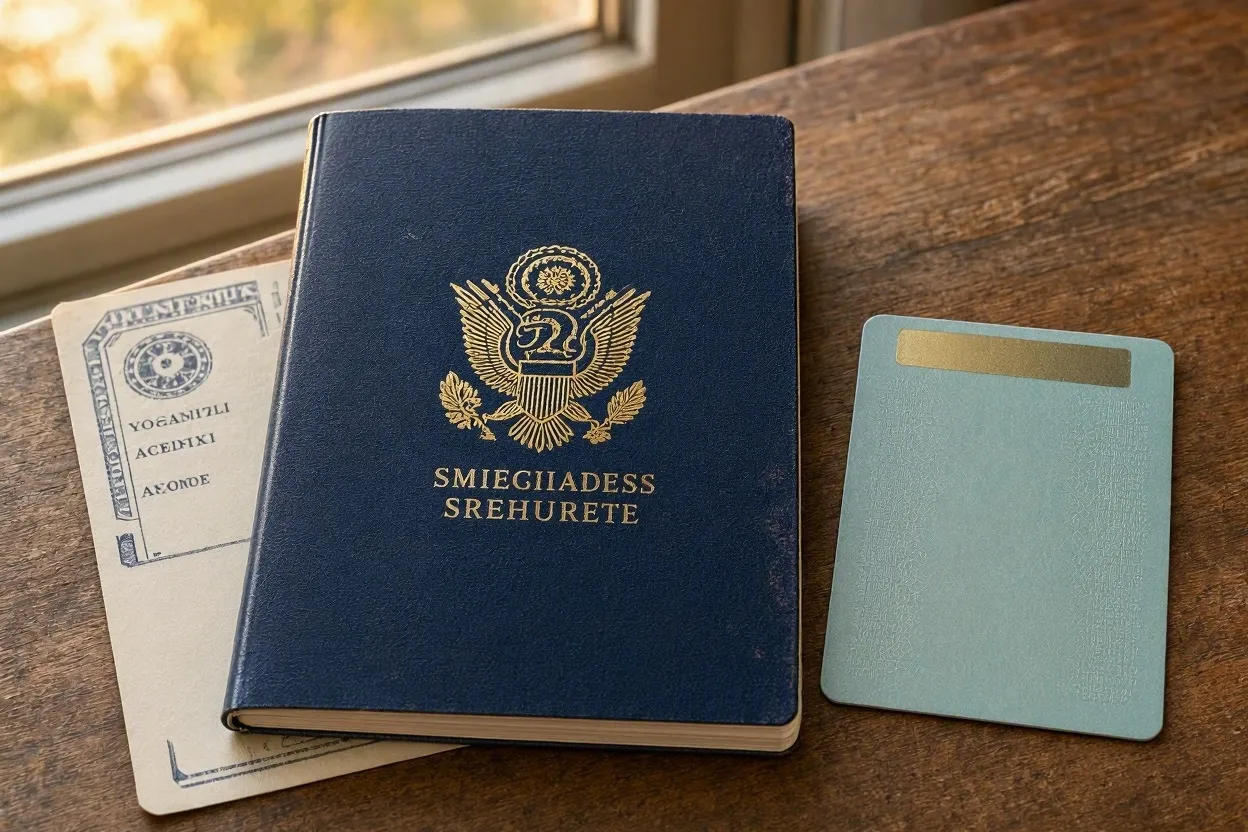
A passport book works for all international travel by air, land, and sea. A passport card only works for land and sea travel to Canada, Mexico, Bermuda, and select Caribbean countries. The book is an actual booklet with visa pages and room for entry and exit stamps. The card is plastic and wallet-sized, with no visa pages at all.
Both come from the same application, Form DS-11, and both prove U.S. citizenship at the federal level. Someone flying from Chicago to Rome needs the book. Someone driving from Detroit into Windsor, Ontario for the weekend can get by with just the card.
Consular officers abroad only recognize the book as a basis for emergency assistance or reentry documentation if a traveler loses their ID overseas. The card doesn’t carry that same weight, since it was never designed for use outside North America and the Caribbean in the first place.
| Feature | Passport Book | Passport Card |
| International air travel | Works everywhere | Not accepted |
| Land/sea travel to Canada, Mexico, Bermuda, Caribbean | Works | Works |
| Land/sea travel elsewhere | Works | Not accepted |
| Format | Booklet with visa pages | Wallet-sized plastic card |
| Application form | DS-11 | DS-11 |
| Consular emergency assistance abroad | Recognized | Not recognized |
How Much Does a Passport Book Cost Compared to a Passport Card?
A passport book runs $165 for first-time adult applicants. A passport card runs $65. That $100 gap widens even more at renewal. Kids under 16 pay $135 for a first-time book and $50 for a first-time card.
Renewal pricing drops sharply for both. The book falls to $130 to renew and the card falls to $30, assuming the applicant already holds a valid or recently expired passport and qualifies for mail-in renewal. Anyone under 16 can’t renew by mail regardless of document type; they have to reapply in person as a new applicant every time.
Bundling is where the real savings show up. Apply for both documents on the same DS-11 and you pay one $35 acceptance fee instead of two. For a family of four applying for both at once, that single-fee rule saves $140 compared to filing everyone separately.
| Fee | Passport Book | Passport Card |
| First-time adult | $165 | $65 |
| First-time child (under 16) | $135 | $50 |
| Adult mail-in renewal | $130 | $30 |
| Both, first-time adult (combined) | $195 total | — |
| Expedited service (add-on) | +$60 | +$60 |
Where Can You Use a Passport Card vs a Passport Book?
The card works at land border crossings and sea ports of entry between the U.S. and Canada, Mexico, Bermuda, and select Caribbean nations. The book works anywhere in the world. There’s no exception for the card outside that list.
Border agents accept the card at Ready Lanes (the dedicated fast lanes at major U.S.-Mexico and U.S.-Canada crossings that use RFID to speed up vehicle inspection). A driver crossing from San Diego into Tijuana on a routine trip can clear a Ready Lane in under two minutes with a card, well ahead of the standard-lane wait.
Cruise passengers get a slightly different rule. A closed-loop cruise that departs and returns to the same U.S. port technically doesn’t require a passport at all under current maritime guidance, but a card still works as valid ID if the ship makes an unscheduled stop outside its coverage area. Booking an open-jaw itinerary, though, flying into one country and sailing out of another, means you need the book, since air travel enters the picture.
Is a Passport Card Valid for International Flights?
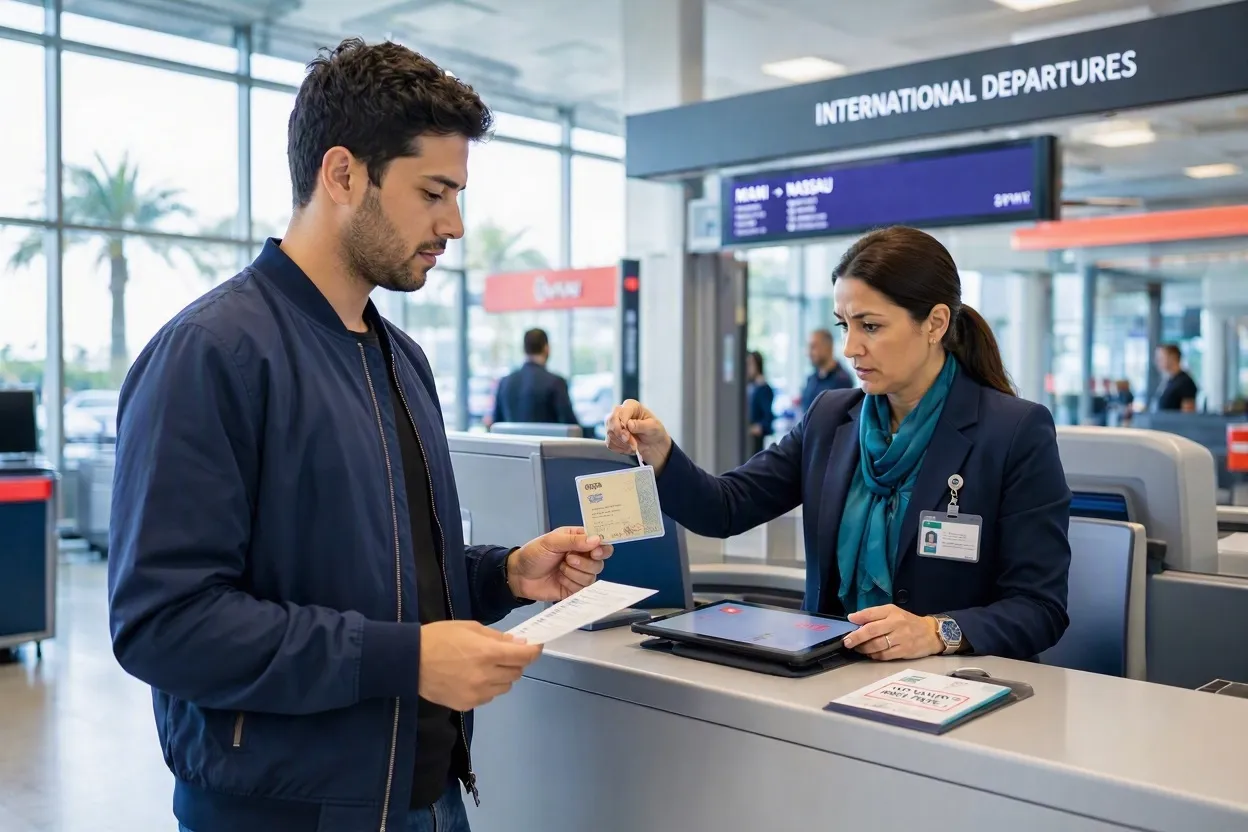
No. A passport card can’t board an international flight, anywhere, ever. Airlines and CBP agents reject it at every international departure gate and every reentry checkpoint involving air travel.
This mix-up catches a lot of travelers off guard. Someone booking a flight from Miami to Nassau might assume the card works because the Bahamas sits close to the Caribbean corridor. It doesn’t, and they get turned away at check-in. The card’s coverage is strictly land and sea, not air, even to countries it otherwise permits by boat.
Domestic flights are a different story entirely. A passport card works fine as ID at TSA checkpoints for flights between U.S. airports, since it counts as a REAL ID-compliant document.
How Long Is a Passport Book or Passport Card Valid?
Both stay valid for 10 years for adults and 5 years for anyone under 16. Validity length doesn’t change based on which document you pick, so cost and travel coverage remain the real differences.
An 18-year-old applying for the first time gets a document that expires around their 28th birthday. A 10-year-old applying for the first time gets one that expires around age 15, which means a fresh in-person application rather than a mail-in renewal once that hits.
Renewal eligibility comes down to timing, not document type. Adults can typically renew by mail if their most recent passport expired within the past 5 years and was issued after they turned 16. Miss that window and you’re reapplying with full citizenship evidence again, book, card, or both.
What Size Is a Passport Card Compared to a Passport Book?
A passport card measures 3.375 x 2.125 inches (8.6 x 5.4 cm), basically the footprint of a credit card. A passport book measures 5 x 3.5 inches (12.7 x 8.9 cm) closed. That size gap is most of the card’s appeal.
The card slides right into a wallet slot next to a driver’s license, which matters if you cross the same border every week and don’t want to lug a booklet around. The book needs its own travel pouch or bag pocket, since folding or bending it damages the embedded chip and the visa pages.
Both documents carry an embedded chip storing biometric data, a digital photo, and identifying details. The book’s chip sits inside the back cover; the card’s sits just beneath the plastic surface near the printed info.
Does a Passport Card Count as a REAL ID?
Yes. TSA accepts the card as a REAL ID-compliant alternative for domestic flights and entry into certain federal facilities, putting it in the same category as a REAL ID-compliant driver’s license for domestic ID purposes.
Travelers in states that haven’t fully rolled out REAL ID-compliant licenses sometimes get a card just for this reason. Someone in a state with delayed REAL ID enforcement can use a $65 card as a workaround for flight ID instead of waiting on a DMV appointment.
An Enhanced Driver’s License (EDL), issued by a small number of border states including New York, Michigan, Washington, and Vermont, does something similar for land and sea crossings, but only within that state’s own border-crossing agreements. A passport card carries federal recognition everywhere within its coverage area, which makes it the more portable option if you move between states or don’t live in an EDL-issuing one.
Can You Apply for a Passport Book and a Passport Card at the Same Time?
Yes. The DS-11 form lets you request both in one submission and saves $35 on the combined acceptance fee versus filing separately. You just check a box for book, card, or both; no extra paperwork required. Already have a book? You can add a card later through mail-in renewal (Form DS-82), as long as your existing book was issued within the last 15 years and after you turned 16. It works the other way too: a cardholder can add a book later through the same renewal path, without starting over as a first-time applicant.
Processing timelines run the same for both when submitted together. Routine processing currently takes 4 to 6 weeks; expedited service shaves that to 2 to 3 weeks for an extra $60. Shipping upgrades only apply to the book, though, since the State Department doesn’t offer 1-to-3-day expedited shipping for the card portion of a combined application.
What Documents Do You Need to Apply for a Passport Book or a Passport Card?
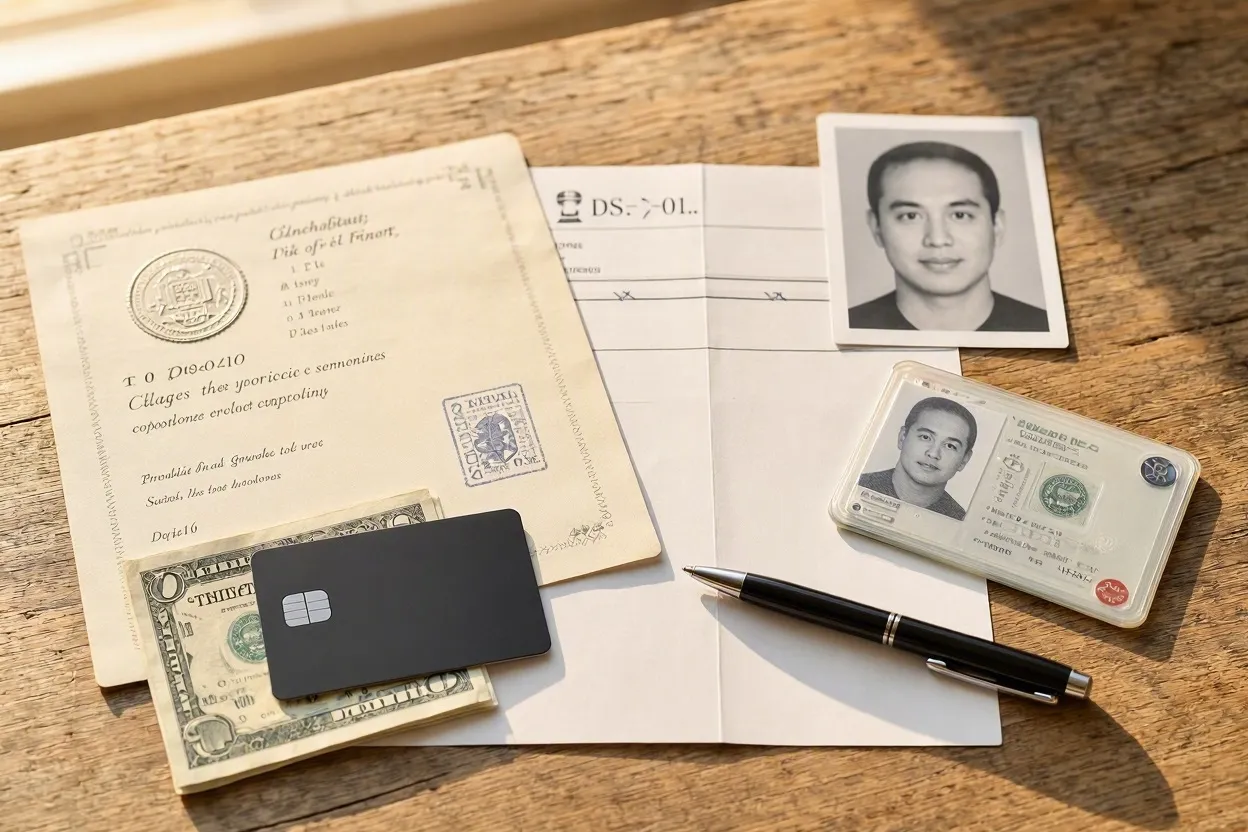
The core paperwork is the same no matter which one you’re requesting:
- A certified birth certificate with a raised seal or state registrar stamp, for U.S.-born applicants
- A government-issued photo ID, like a driver’s license, for identity verification
- A completed DS-11 form indicating book, card, or both
- A passport photo meeting current size and background requirements
- Payment for the application fee and the separate execution fee (they’re billed independently)
No birth certificate on hand? Contact the vital records office in the county, city, or state where you were born and request a certified copy. Applicants born outside the U.S. need alternative proof of citizenship instead, like a Consular Report of Birth Abroad or a Certificate of Naturalization.
No driver’s license? You can substitute another primary photo ID, and the State Department will accept secondary forms of identification if nothing primary is available at the time you apply.
Who Should Get a Passport Card Instead of a Passport Book?
The card fits travelers whose international trips stay limited to land or sea crossings into Canada, Mexico, Bermuda, or the Caribbean. Anyone flying internationally needs the book, no matter the destination. Frequent border commuters, cruise passengers on card-eligible itineraries, and military members and their dependents tend to benefit most from the card, though service members stationed overseas often need the book anyway, since most assignments involve flights to duty stations outside the card’s coverage zone.
Parents traveling with minors should carry the book for any child likely to fly, since airlines and CBP apply the same air-travel restriction to kids as adults, plus a notarized travel consent letter if the child is traveling with just one parent or a non-parent guardian. And anyone eyeing Global Entry, the CBP program that speeds up reentry at major airports, still needs a book to enroll, since Global Entry kiosks only process international air arrivals.
Passport Book vs Passport Card: Which One Fits Your Travel Plans?
Honestly, most travelers are better off with both. The $35 combined-application discount makes the card a cheap add-on to a book most international travelers need anyway. Picking just one works fine for narrow, predictable travel patterns, but it leaves a gap the moment plans change.
A few scenarios make this concrete:
- A family planning a one-time flight to Europe only needs the book. The card adds nothing for that trip.
- A retiree splitting time between Arizona and a vacation home in Mexico, driving across the border a few times a year, gets more value from the card’s lower cost and Ready Lane access.
- A college student studying abroad for a semester, planning weekend trips by both plane and ferry, needs the book for flights but might still want the card as backup ID if the book gets lost mid-trip.
The decision hinges on transportation mode, not destination alone. A trip to Mexico by plane still needs the book. A trip to Mexico by car still allows the card. Check the actual route and mode of travel before applying, and you’ll avoid wasting $65 or missing a flight.
Conclusion
In the end, it comes down to one thing: whether your trip involves flying. A passport book covers air, land, and sea travel anywhere in the world for $165 (first-time adult applicants). A passport card covers only land and sea crossings into a short list of neighboring countries for $65, with the bonus of REAL ID-compliant domestic use. Fly internationally at any point, and you need the book. Stick to land or sea crossings into Canada, Mexico, Bermuda, or the Caribbean, and the card works on its own, or as a cheap $35 add-on to a book you already have.
Fees and processing times above reflect U.S. Department of State rates current as of 2026. These change periodically, so confirm current pricing and timelines at travel.state.gov before you apply.
FAQs

Michael Reynolds
Michael Reynolds leads immigration content at ImmigrationWin, covering visa requirements, application and relocation pathways. He researches immigration policies and official government guidance to explain changing rules clearly. His guides help students, families, and professionals make informed decisions about moving abroad.
Related Posts