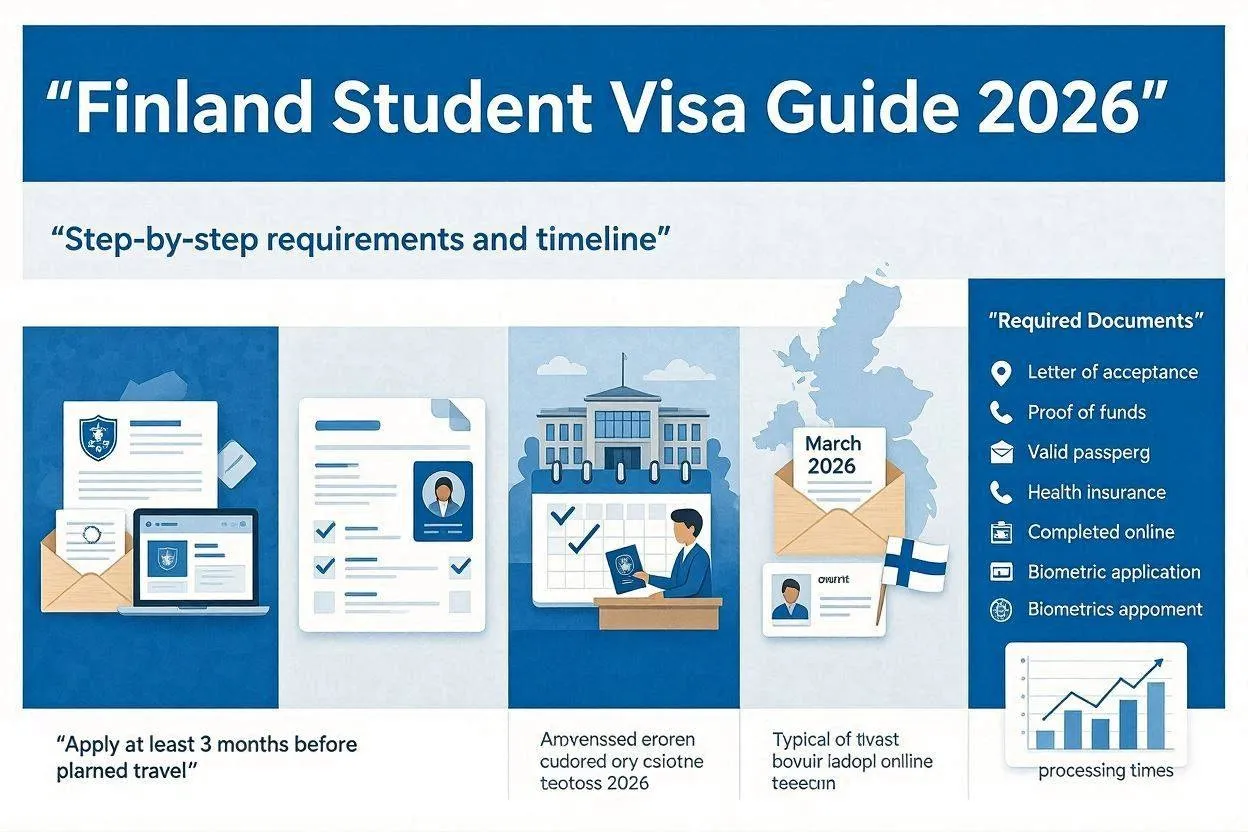
Finland Student Visa Guide for Non-EU Students (2026)
If you’re planning to study in Finland for longer than 90 days, you’ll need a student residence permit. It’s a legal requirement for non-EU citizens who want to enter and live in the country for a degree program.
The Finnish Immigration Service, known as Migri, handles every student application. Get familiar with their rules early, since the process rewards preparation more than it punishes small mistakes.
What is the Official Finland Student Visa for Non-EU Learners?
The official document isn’t a sticker visa. It’s a residence permit, and you need one once your program runs longer than three months. Courses under 90 days only need a standard Schengen visa.
Apply from your home country and you’ll receive your permit card before you travel. That card carries your biometric data, and it doubles as proof of your right to work.
Distinguishing Between the Temporary B Permit and Continuous A Permit
Students entering degree programs at universities or universities of applied sciences get a continuous A residence permit, covering the whole length of their bachelor’s or master’s studies.
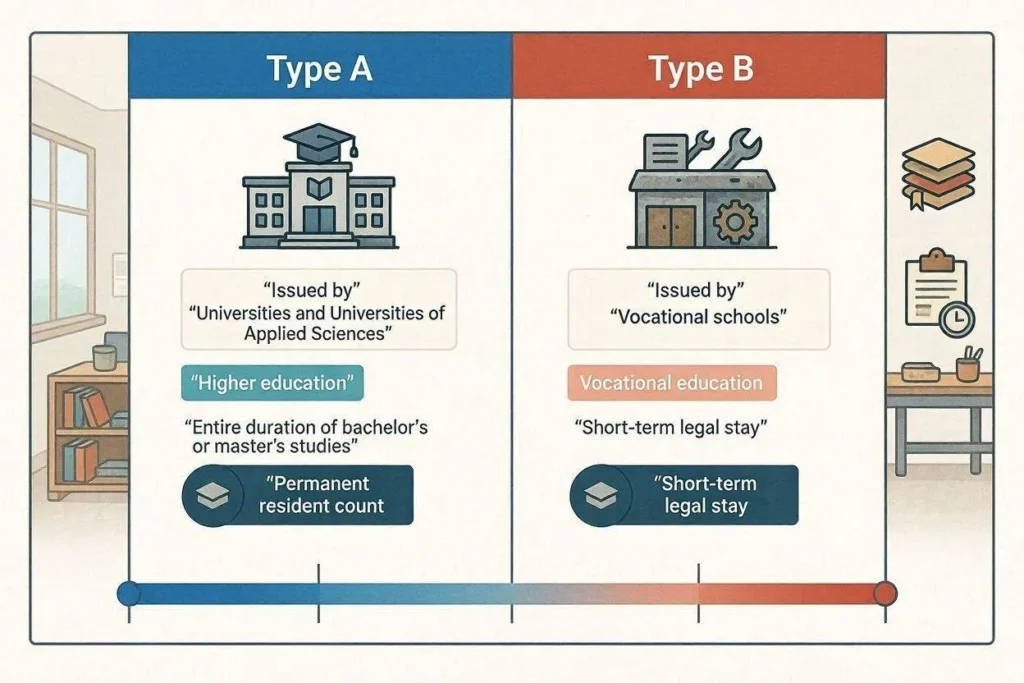
| Permit Type | Education Level | Key Benefit |
| Type A | Higher Education | Permanent Resident Count |
| Type B | Vocational schools | Short-term legal residency |
Vocational schools and non-degree exchange programs get a temporary B permit instead. The difference matters later: a B permit doesn’t count fully toward the years required for citizenship, while an A permit counts in full toward permanent residency.
The Legal Framework of the Finnish Researcher and Student Act
This Act sets out your rights during the application process and guarantees international students the same structural protections as domestic ones, covering everything from housing to the workplace.
It does exclude a couple of groups, though. Anyone who has applied for asylum within the EU falls outside its scope, and an active deportation order rules out a student permit entirely.
What are the Eligibility Requirements for a Finland Student Visa?
Everything starts with an unconditional letter of acceptance from an approved Finnish institution, whether that’s a research university, a polytechnic, or a certified vocational academy. Without it, there’s no application to file.
You’ll also need a passport valid beyond your study period, with at least two blank pages for stamps, and passport photos sized exactly 47mm by 36mm (1.85 x 1.42 inches).
Academic Admission via the Official Studyinfo Portal
Applications for public higher education run through a national portal called Studyinfo. One joint application form lets you apply to up to six degree programs at once.
Universities look at your high school certificates, transcripts, and portfolios. If you’re accepted, you’ll get an electronic letter of acceptance, and you need to click the confirmation link before the institution’s deadline to actually secure your place.
Mandatory Language Proficiency Certificates for University Enrollment
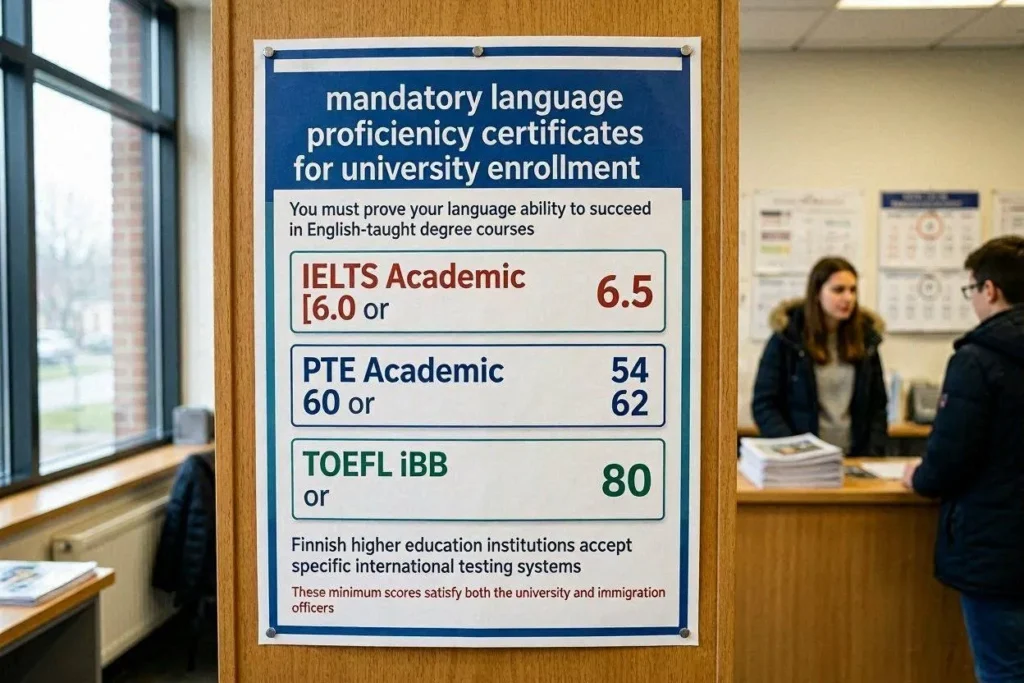
English-taught degree programs require proof of language ability, and Finnish institutions accept a handful of international tests. Minimum scores satisfy both the university and the immigration officers reviewing your file.
- IELTS Academic: 6.0 or 6.5
- PTE Academic: 54 or 62
- TOEFL iBT: 80 or 92
Ask the testing agency to send your scores straight to the university’s database. Some programs skip standardized tests altogether and run their own entrance exams instead, in which case you’ll need proof of your exam invitation. Requirements vary by country, so it’s worth checking with an immigration advisor if you’re unsure whether an exemption applies to you.
How Much Bank Balance is Required for a Finland Student Visa in 2026?
You need a minimum bank balance of 9,600 Euros for your first academic year. Migri checks this closely, since it’s there to confirm you can support yourself without leaning on public welfare.
Bringing family changes the math. A spouse adds 700 Euros a month, and each child adds another 500.
Calculating the Monthly Living Cost Threshold for Higher Education
Migri sets the individual living cost at 800 Euros a month, covering rent, groceries, transport, and study materials. Budget carefully if you’re ish institution
Large, sudden deposits need an explanation in writing. An unexplained lump sum tends to raise questions about where the money actually came from. If you’d like help putting together your financial documents, our detailed visa application guide walks through it step by step.
What Health Insurance Policies Meet Migri Requirements?
Private health insurance is required before you submit your application, and it needs to cover you for your entire stay. How much of Finland’s public healthcare you can access depends on your program’s length and type.
The policy can’t carry a deductible, meaning coverage starts from the first Euro spent. It also needs to be active on the day you arrive, so a short-term travel policy won’t cut it.headed somewhere pricier, like Espoo.
The funds need to cover your entire permit period. Two years of study means showing access to 19,200 Euros, though you can subtract prepaid accommodation if you have the official receipts.
Acceptable Financial Documents and Restitution Proofs
The money has to sit in a personal account under your own name, one that allows immediate withdrawals inside Finland. Migri won’t accept statements from sponsors outside your immediate parents or spouse.
- Personal bank statements covering 3 consecutive months
- Official scholarship certificates from foundations, governments, or universities
- Tuition fee payment receipts from your Finn
Minimum Coverage Amounts for Degree and Non-Degree Programs
Coverage requirements scale with how long you’re studying.
| Study Duration | Minimum Insurance Coverage Requirement |
| Under 2 Years | 120,000 Euros medical benefits |
| 2 Years and Over | 40,000 Euros medical benefits |
Programs under two years need 120,000 Euros in coverage, since students at that stage don’t yet have access to the Finnish Student Health Service. Once your program hits two years, the threshold drops to 40,000, and you’ll pay a mandatory semester fee to Kela to use FSHS.
Approved International Insurance Providers for Finnish Relocation
Stick to a provider Migri actually recognizes for student processing, since they know exactly how the certificate needs to be worded, including your full name, birth date, policy dates, and coverage zone.
- Swisscare International Student Health Insurance
- Aon Student Insurance
- SIP Gold or SIP Integral by Marsh
- Cigna Global student medical policies
How to Apply for a Finland Student Visa Online
The application itself is electronic. Before you start, gather your certificates, financial records, and identity documents, and scan everything as clean PDFs under 4MB each.
Going online is faster and cheaper than paper, and you can track your status in real time through the portal. Just make sure you respond to any clarification requests from officers within 14 days.
Creating Your Profile on the Enter Finland Electronic Platform
Set up an account on the official Enter Finland portal using an email you actually check daily, then select “Residence permit for studies” from the form menu.
Match every field to your passport exactly: university name, degree title, tuition payment data. Upload your admission letter, insurance certificate, and bank statements into their designated slots.
Booking and Attending Your Biometric Identity Appointment
Identity verification happens in person, at an embassy, consulate, or external visa center. Book the slot as soon as you submit your online form, since June through August gets busy fast.
Bring your passport, original degrees, and your printed confirmation page. The officer takes your fingerprints and a photo, then checks your originals against what you uploaded.
What are the Processing Times and Finland Visa Fees in 2026?
The electronic application fee is 350 Euros in 2026, and it’s non-refundable, so a rejection means losing that money too. Paying by card or international transfer keeps things moving.
| Application Method | Processing Fee | Average Decision Time |
| Electronic Portal | 350 Euros | 30 days to 60 days |
| Paper Form | 450 Euros | 60 days to 90 days |
Paper applications cost 450 Euros and take longer, since staff enter your data by hand. VFS Global centers may charge an extra service fee on top.
Cost Breakdown for Online vs Paper Application Submissions
Filing electronically saves you 100 Euros right away, plus whatever you’d have spent on postage, printing, and travel to an office. It also runs through automated checks that catch missing signatures before they become a problem.
Paper applications carry more risk of formatting errors and delays. If you go that route, you’ll need form OLE_OPI filled out in black ink, submitted in person at your identity verification appointment.
Variables that Influence the Decision Timelines at Finnish Missions
Processing runs 30 to 60 days on average for electronic applications, but a few things push that number around:
- Your citizenship and the local embassy’s workload
- Family applications attached to your student profile
- How quickly your university verifies tuition payment
- Additional security checks required by European authorities
Applications filed in May tend to move faster than ones filed in August, when embassies are swamped.
Why do Finnish Student Visa Applications Get Refused?
Money problems are the number one reason applications get denied. If your balance dips below 9,600 Euros for even a single day, that’s grounds for rejection. Officers want to see consistent stability, not a balance that was briefly padded for the application.
Altered or inaccurate documents are worse: they trigger an immediate refusal and can get you banned from the Schengen zone long-term. Make sure your certificates carry official stamps and that translations match the originals exactly.
Red Flags in Bank Statements and Sudden Financial Deposits
Officers dig into your transaction history looking for the real source of your funds. A 10,000-Euro deposit with no explanation is an instant red flag, and the default assumption is that it’s borrowed money meant to inflate the application.
Selling property to fund your studies? Bring the legal sale deed. Getting the money as a gift from your parents? You’ll need a notarized affidavit of support. Either way, the funds have to stay under your control throughout the decision period.
Inadequacies in the Statement of Purpose and Study Motivations
Your Statement of Purpose needs to show a genuine intent to study, not just a plan to work in Europe. Explain why you picked your specific major and how it fits your career path.
- Vague descriptions of course modules or university history
- No clear link between your past education and the new degree
- Signs of AI-generated or plagiarized text
- No plan to return home or find regular employment afterward
Can You Work on a Finland Student Visa During Your Studies?
Part-time work is allowed on a student residence permit, and you won’t need a separate work permit to take a job. It’s a real way to gain local experience and cover your living costs.
Just don’t let it eat into your degree. Immigration checks your academic progress whenever you apply to extend your permit, and study has to stay the priority.
Weekly Hourly Boundaries During Active Terms and Holiday Periods
During term time, you can work up to 30 hours a week, whether that’s a job, freelance work, or something remote. The system tracks this annually too, capping you at 1,560 hours a year.
Holidays are different. Summer break and the Christmas period both allow full-time, unlimited hours, as long as it doesn’t collide with your thesis deadline or required lab sessions.
Post-Graduation Job Search Permits and Permanent Residency Pathways
Finish your degree, and you can apply for a two-year job-seeking permit, usable in separate stretches over five years after graduation.
If you held a continuous A permit, every year of study counts fully toward permanent residency, which becomes available after four consecutive years in Finland. From there, landing a regular employment contract in your field is what actually moves you out of the student track. Our study abroad options page is a good starting point if you’re still weighing where to apply.
Professional Assistance for Your Finnish Education Journey
Between the paperwork, the financial thresholds, and university deadlines all landing at once, the process can get overwhelming fast. Our migration team offers personalized consulting to help you get the documents right the first time. Reach out through our visa application guide to start your assessment.
Frequently Asked Questions

Michael Reynolds
Michael Reynolds leads ImmigrationWin’s immigration, visa, and global mobility content division. He specializes in researching immigration policies, visa requirements, application processes, and international relocation pathways for individuals, families, students, and professionals. With extensive experience analyzing immigration regulations and official government guidance, Michael brings a research-driven approach to complex immigration topics and changing visa policies. He is the primary author of ImmigrationWin’s visa guides, immigration resources, and country-specific content, helping readers better understand their options and make informed decisions about their international journey.
Related Posts