
Germany Student Visa Guide: Requirements and Process for 2026
Planning to study in Germany for longer than 90 days? You’ll need a national D visa. It’s the official travel authorization non-EU citizens use to enter the country and later convert into a residency card.
Getting there comes down to meeting a fairly precise set of administrative requirements. The Federal Foreign Office handles student entry clearances worldwide, and you apply by submitting your documentation to your regional embassy.
What is the Official Germany Student Visa for Non-EU Learners?
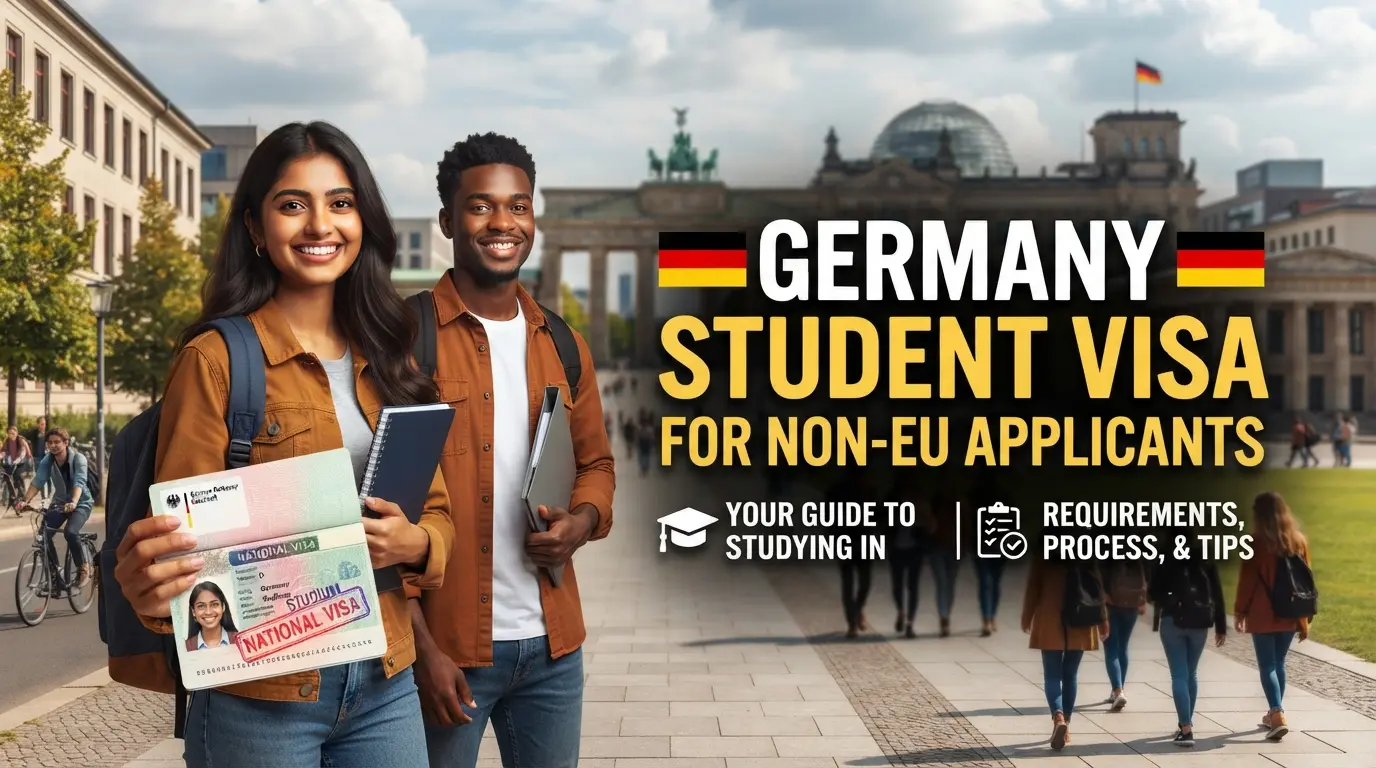
For long-term degree programs, the document you need is a national D visa, not a short-stay entry permit. Any program running longer than three months requires it. Shorter vocational certifications under 90 days can use the standard Schengen visa instead.
Germany keeps close track of international student registrations through mandatory address logs. You’ll get an entrance sticker in your passport before you even leave home, which lets you travel while your biometric residence card is being produced.
Distinguishing Between the National D Visa and a Short-Term Schengen Visa
National D visas go to students entering full-time undergraduate or postgraduate programs at public institutions or certified private business schools. You’re granted an initial 90 to 180 day window on arrival.
| Visa Category | Program Length | Final Residency Status |
| National D | Exceeds 90 Days | Renewable Residence Card |
| Schengen C | Under 90 Days | Non-Renewable Exit Date |
Enrolling in a summer language course or a short research workshop, on the other hand, gets you a Schengen C visa. That one expires on a fixed date, no extensions. The national D is the one that opens the door to a multi-year residency permit.
The Legal Framework of the German Federal Residence Act Section Sixteen b
Section 16b of the Federal Residence Act is what actually sets your immigration parameters and governs your residency rights. It requires you to complete your academic modules within a reasonable timeframe, though it does give you one chance to switch your major during your first three semesters.
Asylum applicants can’t switch into a student visa track under this law, and an active judicial exclusion order will disqualify you outright. The rules are strict, but they exist to keep the process honest for everyone else applying in good faith.
What are the Eligibility Requirements for a Germany Student Visa?
The starting point is an official university admission letter. Without it, there’s no application to file. That means acceptance from a state-funded university, a technical university, or a recognized preparatory college (a Studienkolleg).
Beyond that, you’ll need a passport valid well past your arrival date with at least two blank pages, plus passport photos sized exactly 45mm by 35mm (1.77 x 1.38 inches). Small detail, but embassies are strict about it.
Academic Admission via the Official University Zulassungsbescheid
This admission letter, called a Zulassungsbescheid, is what you present at your visa interview. It lists your legal name, your degree program, the language of instruction, and whether you need to pass an entrance exam before your first semester starts.
Universities evaluate your prior school certificates and bachelor’s degree, then issue a digital confirmation letter, either directly or through Uni-Assist. You’ll need to sign and return it before the enrollment deadline to actually hold your seat.
Mandatory Language Proficiency Certificates for Degree Enrollment
Embassies want proof you can actually follow university-level lectures. What counts as “proof” depends on whether your program is taught in German or English:
- IELTS Academic: overall band score of 6.0 or 6.5
- TOEFL iBT: total score of 80 or 90
- Goethe-Zertifikat: minimum B2 for German-taught programs
- TestDaF: at least TDN 4 across all sections
Have your test center send scores directly to the university’s registration office. Some programs won’t accept alternative certificates without an official agency stamp, so it’s worth double-checking with an immigration advisor before you commit to a particular test.
How much Bank Balance is Required for a Germany Student Visa in 2026?
You’ll need a minimum locked balance of 11,904 euros to cover your first academic year. This is Germany’s way of confirming you can support yourself without relying on public welfare, and embassies check this figure closely before issuing anything.
If you’re applying under conditional student status, the bar is higher: 1,091.20 euros per month, or 13,094.40 euros for the year. That extra buffer covers you while you’re working toward an unconditional admission.
Calculating the Monthly Living Cost Threshold Based on Bafög Rates
This number isn’t arbitrary. The Federal Foreign Office ties it to national student subsidy rates, fixed at 992 euros a month for 2026, meant to cover rent, food, transit, and books.
You need to maintain that balance for the full length of your entry visa. An 18-month preparatory program, for instance, means demonstrating 17,856 euros total. A full scholarship covering your living costs can exempt you from this requirement entirely.
Approved Providers for Opening an Online Sperrkonto Blocked Account
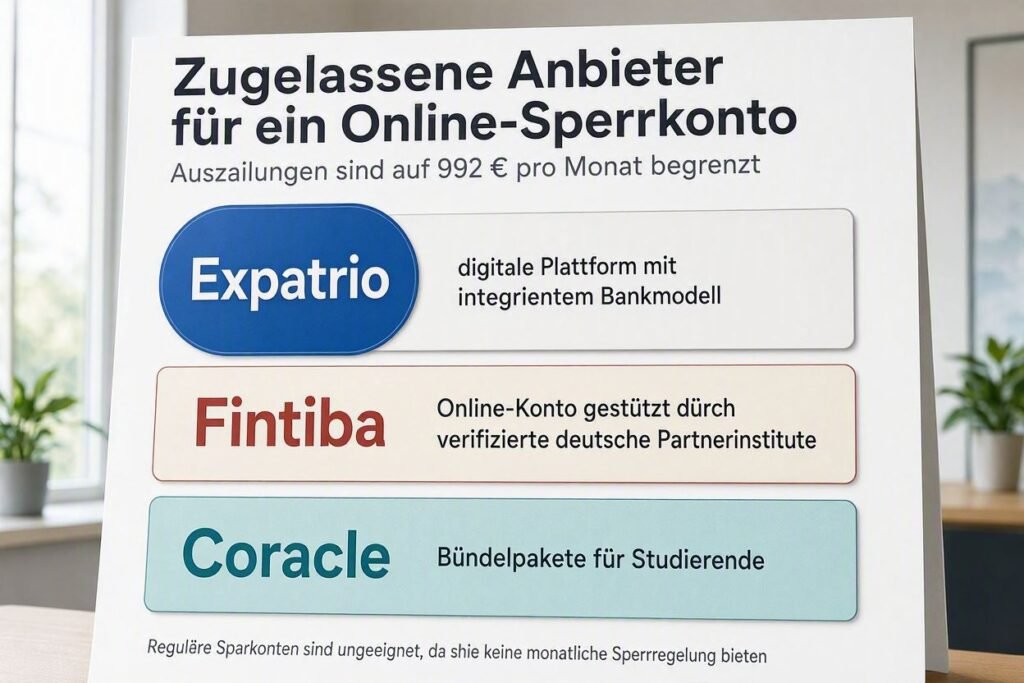
The blocked account, or Sperrkonto, has to come from an approved provider. It caps your withdrawals at 992 euros a month once you’re in Germany. Regular savings accounts don’t work here because they lack that monthly restriction.
- Expatrio: digital platform with an integrated banking model
- Fintiba: online account backed by verified German partner institutions
- Coracle: bundled student service plans
- Deutsche Bank: traditional paper-based account setup
Wire the full 11,904 euros plus the provider’s setup fee, and you’ll get a digital blocking confirmation once it clears. International transfers can be slow, so build in some buffer time before your interview.
What Health Insurance Policies Meet German Immigration Requirements?
You need compliant health insurance in place before your embassy interview, and it has to cover major medical expenses starting the day you land. This keeps international students from straining the public hospital system.
Zero deductible is a hard requirement here, meaning your provider pays out immediately rather than after you’ve covered costs upfront. Short-term travel insurance won’t satisfy this. Let your coverage lapse and your residence permit gets cancelled, so this isn’t something to let slide.
Distinguishing Between Statutory and Private Student Medical Coverage
Under 30 and heading to a public university? You’ll register for statutory health insurance (GKV), which gives you the same coverage as domestic students and coordinates directly with your university each semester.
| Insurance Model | Age Parameter | Best Suited For |
| Statutory (GKV) | Under 30 Years | Public University |
| Private (PKV) | 30 Years and Over | Language Schools |
Over 30, or enrolled in a language prep track? Private insurance (PKV) is your path. Premiums tend to run lower, but you’ll be submitting claims manually, and you’ll need an official waiver from the public system first.
Approved Insurance Providers for Incoming International Scholars
Stick to providers registered with Germany’s federal supervisory authority. They issue digital confirmations that plug directly into the embassy’s tracking system, and the printout needs your name, birth date, and the relevant European coverage regulations spelled out.
- Techniker Krankenkasse (TK): statutory student packages
- AOK: regional public student insurance
- Barmer: statutory coverage for university learners
- Care Concept: private student plans for prep tracks
How to Apply for a Germany Student Visa Online
Everything starts through the digital immigration portal. Before you log in, gather your academic records, financial block confirmation, and identification documents, and scan them as clear PDFs under 5MB each.
The portal is genuinely useful here. It cuts down processing time and flags missing information before you ever set foot in an embassy, and you can track your review progress through your dashboard. If something’s wrong, you typically have seven days to fix it once you’re notified.
Creating Your Profile on the New Consular Services Portal Platform
Register on the Federal Foreign Office’s Consular Services Portal using an email you check often. From the homepage, select “National Visa for Study Purposes.”
Fill in every field carefully, making sure everything matches your passport exactly, spelling included. You’ll enter your German university’s address, your course duration, and your blocked account number, then upload your Zulassungsbescheid, insurance page, and academic records.
Booking and Attending Your Physical Embassy Interview Appointment
Once your online review clears, book your interview at the nearest German embassy or consulate. Do this early. June through September gets packed with applicants racing to make the winter semester, so appointment slots disappear fast.
Bring your original passport, your stamped diplomas, and a printed copy of your portal submission. The consular officer will take your fingerprints and biometric photo, then spend a few minutes asking about your study plans and what you intend to do afterward.
What are the Processing Times and Germany Visa Fees in 2026?
The processing fee for a national D student visa is 75 euros in 2026, paid in cash at the embassy in local currency. That fee is non-refundable, even if your application gets denied.
| Application Route | Processing Fee | Standard Wait Window |
| Digital Portal path | 75 Euros | 25 days to 45 days |
| Manual Embassy file | 75 Euros | 45 days to 90 days |
Applicants under 18 pay a reduced rate of 37.50 euros. Creating your profile on the Consular Services Portal itself is free, though you should budget for travel costs if there’s no German diplomatic mission in your city.
Cost Breakdown for Standard Processing and Administrative Surcharges
Going through the online portal saves you printing costs and repeat trips to the consulate. You pay the base 75 euro fee once, at your biometric appointment, and that’s it. No courier surcharges, no hidden extras.
Manual paper applications cost more in practice because you’re duplicating document stacks and filling out forms by hand in permanent black ink. They also take longer, since staff have to manually enter everything into the system.
Variables that Influence Decision Timelines at Global German Missions
Digital applications typically take 25 to 45 days, though your actual wait depends heavily on your home country and how busy the local office is. Files submitted in April tend to move faster than ones submitted during the August rush.
- Current caseload at the embassy handling your file
- Response times from the local aliens’ authority inside Germany
- Completeness of your academic and financial documents
- Whether additional security review by European federal police is required
Why do German Student Visa Applications Get Refused?
Far and away, the most common reason is an incomplete or unverified Sperrkonto statement. Fall short of the 11,904 euro mark and your file gets denied, no exceptions. Officers want airtight proof you can cover your own expenses without working illegally.
Fake academic transcripts are worse: they trigger a long-term entry ban across the entire Schengen zone. Make sure every local certificate carries a verified apostille stamp, and double-check that nothing about your name or dates is misspelled between your passport and your school records. Small mismatches stall applications more often than you’d think.
Red Flags in Financial Background Checks and Blocked Account Triggers
Officers dig into where your money actually came from. Drop a large lump sum into your account right before opening a Sperrkonto and you’ll likely get flagged, since it looks like borrowed money parked there just to pass the check.
Sold a business to fund your studies? Bring the tax receipt. Parents sponsoring you? You’ll need their salary records and employment letters. The goal is proving the money is genuinely earmarked for your education, not just sitting there temporarily.
Inadequacies in the Written Statement of Purpose and Motivation Letter
Your statement of purpose needs to connect your past studies to your German degree in a way that actually makes sense. Copy text from an online forum and an officer will catch it, and your application goes nowhere.
- Vague descriptions of your target modules or career goals
- No explanation for why Germany over your home country
- Zero knowledge of the city, housing costs, or campus
- Obvious grammar errors or signs of AI-generated text
Can You Work on a Germany Student Visa During Your Studies?

Yes, part-time work is allowed on a student visa, and you don’t need separate clearance from the Federal Employment Agency to take a job.
That said, your grades come first. Immigration officers review your transcript when you apply to extend your residency, so keep your shifts manageable during lecture periods and don’t let a part-time job derail the actual reason you’re there.
Annual Day Boundaries for Part-Time Work and Academic Internships
The limit is 140 full days or 280 half days per calendar year, a full day being up to 8 hours and a half day up to 4. Immigration tracks this across the year, so exceeding it puts your visa at risk.
Mandatory internships required by your degree don’t count against that limit. Voluntary corporate internships do, in full, so plan your hours accordingly if you’re taking on extra experience beyond what’s required.
Post-Graduation Job Seeker Visas and Permanent Residency Extensions
After graduating, you can apply for an 18-month job seeker visa to find full-time work in your field, and during that window you can work unlimited hours in any sector while you search.
Your student years also count halfway toward permanent residency, which becomes available after two years on a professional work permit, provided your job offer meets the local salary threshold.
Professional Assistance for Your German Education Journey
Between document mapping, financial structuring, and interview prep, this process has a lot of moving parts, and it’s easy for something to slip through the cracks while you’re also juggling university deadlines. Our migration specialists can help format your paperwork and strengthen your application. Reach out through our visa application guide to get started.
Frequently Asked Questions

Michael Reynolds
Michael Reynolds leads ImmigrationWin’s immigration, visa, and global mobility content division. He specializes in researching immigration policies, visa requirements, application processes, and international relocation pathways for individuals, families, students, and professionals. With extensive experience analyzing immigration regulations and official government guidance, Michael brings a research-driven approach to complex immigration topics and changing visa policies. He is the primary author of ImmigrationWin’s visa guides, immigration resources, and country-specific content, helping readers better understand their options and make informed decisions about their international journey.
Related Posts