How to Apply for Tourist Visa USA in 2026: Complete Guide
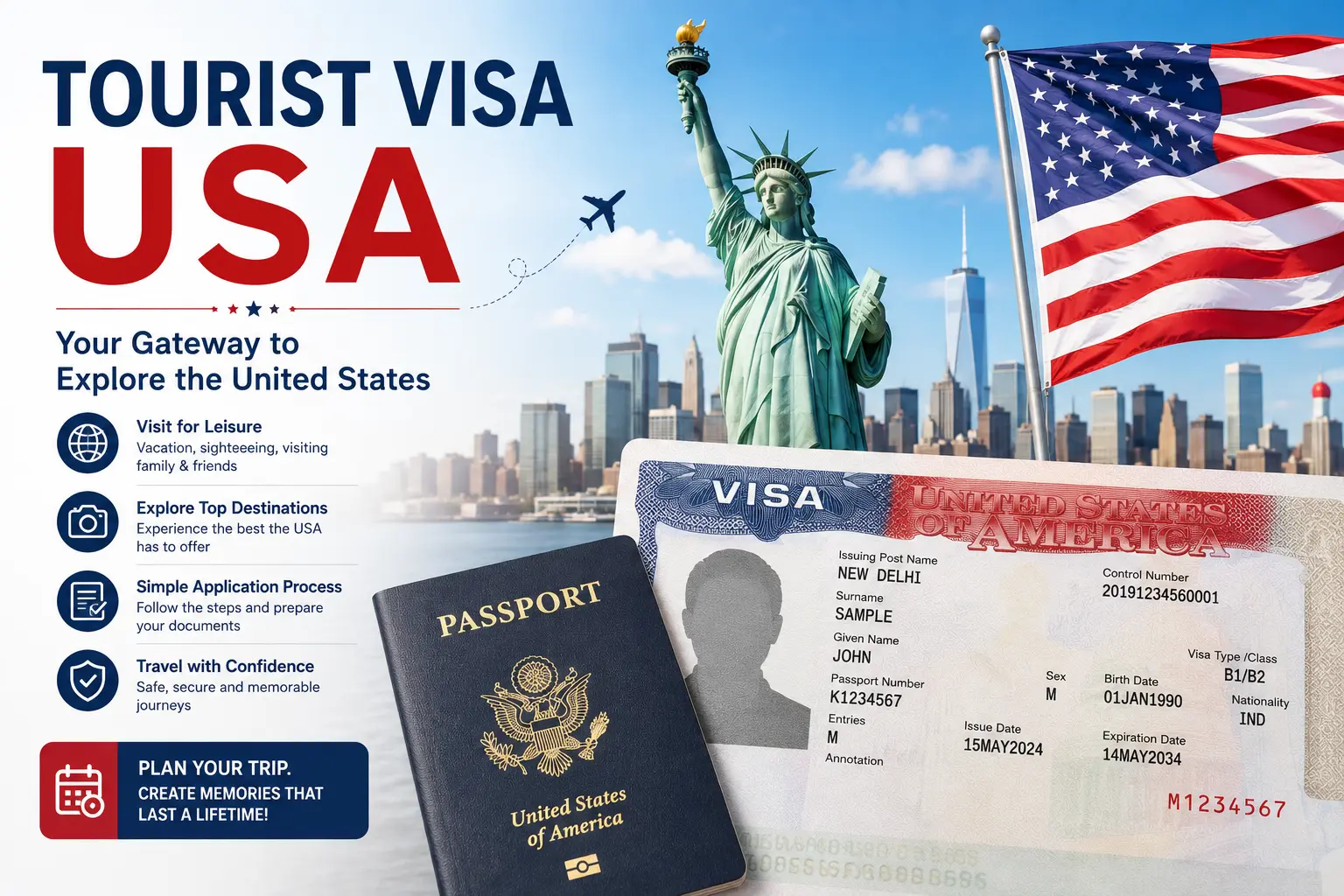
To apply for tourist visa USA approval, you complete Form DS-160 online, pay the $185 MRV fee, and attend an interview at a U.S. Embassy or Consulate. The B1/B2 visitor visa covers tourism, family visits, and short medical treatment for up to 6 months (180 days) per entry. This guide covers every step of the how to apply for tourist visa USA process for 2026, including exact fees, required documents, and interview preparation.
Millions of travelers complete the B1/B2 application each year, and most successful applicants follow the same 5-step sequence outlined below. Read each section in order, since skipping a step, such as scheduling your interview before paying your fee, delays your entire timeline.
What Is a US Tourist Visa (B1/B2)?
A US tourist visa, known as the B1/B2 visitor visa, lets you enter the United States temporarily for pleasure, family visits, or short medical treatment. The visa does not authorize paid employment or permanent residence. Consular officers issue the B1/B2 visa for 1 to 10 years, with each individual stay capped at 6 months (180 days).
B1 Visa vs B2 Visa: Key Differences
The B1 visa covers business activities: conferences, contract negotiations, and consultations. The B2 visa covers tourism activities: sightseeing, family visits, and short courses under 18 hours per week. Most applicants receive a combined B1/B2 visa that authorizes both categories at once.
A B1/B2 visa and permission to enter the country are 2 separate approvals. The visa lets you request entry at a US port; the CBP officer at the border grants the actual authorized stay, typically up to 6 months (180 days) per visit, regardless of how many years your visa remains valid.
How Long Is a US Tourist Visa Valid?
Visa validity depends on your nationality and the reciprocity agreement between your country and the United States. Citizens of countries including India, Brazil, and Mexico typically receive a 10-year multiple-entry B1/B2 visa. Citizens of other nations may receive shorter validity periods of 1 to 5 years, so check the reciprocity table for your specific country before you apply.
Who Needs a Visa Versus ESTA Approval
Citizens of 38 Visa Waiver Program (VWP) countries can travel to the US for 90 days or less without a visa. These travelers need an Electronic System for Travel Authorization (ESTA) instead, which costs $40 as of 2026. Every other traveler must apply for the B1/B2 tourist visa through a US Embassy or Consulate.
How to Apply for Tourist Visa USA Step by Step
To apply for tourist visa USA approval, follow 5 sequential steps: complete Form DS-160, pay the application fee, schedule your interview, gather your documents, and attend your interview. Individual Embassies and Consulates may adjust the exact order slightly.
How to Complete Form DS-160
To complete Form DS-160, visit the Consular Electronic Application Center (CEAC) website and enter your personal, travel, and background details. Upload a digital photo that meets State Department size rules: 2 inches by 2 inches (5cm by 5cm), white background. Print the confirmation page with your barcode number, since your interview requires it.
How to Pay the MRV Application Fee
To pay the MRV application fee, use the payment method listed on your country’s US visa information website: bank transfer, cash deposit, or online portal. The fee costs $185 for B1/B2 applicants in 2026. Your payment receipt stays valid for 365 days from the payment date.
How to Schedule Your Visa Interview
To schedule your visa interview, log into your visa appointment profile and select an open slot at your local US Embassy or Consulate. Interview wait times range from a few days to several months, depending on location and season. Bring your DS-160 confirmation page and fee receipt number to book the appointment.
How to Track Your DS-160 and Interview Status
To track your application, log into the Consular Electronic Application Center portal with your DS-160 barcode number and check your case status. Status labels include “Application Received,” “Administrative Processing,” and “Issued,” each showing where your file sits in the review queue. Contact the embassy’s support line directly if your status shows no change for more than 60 days.
What Documents Do You Need for a US Tourist Visa?
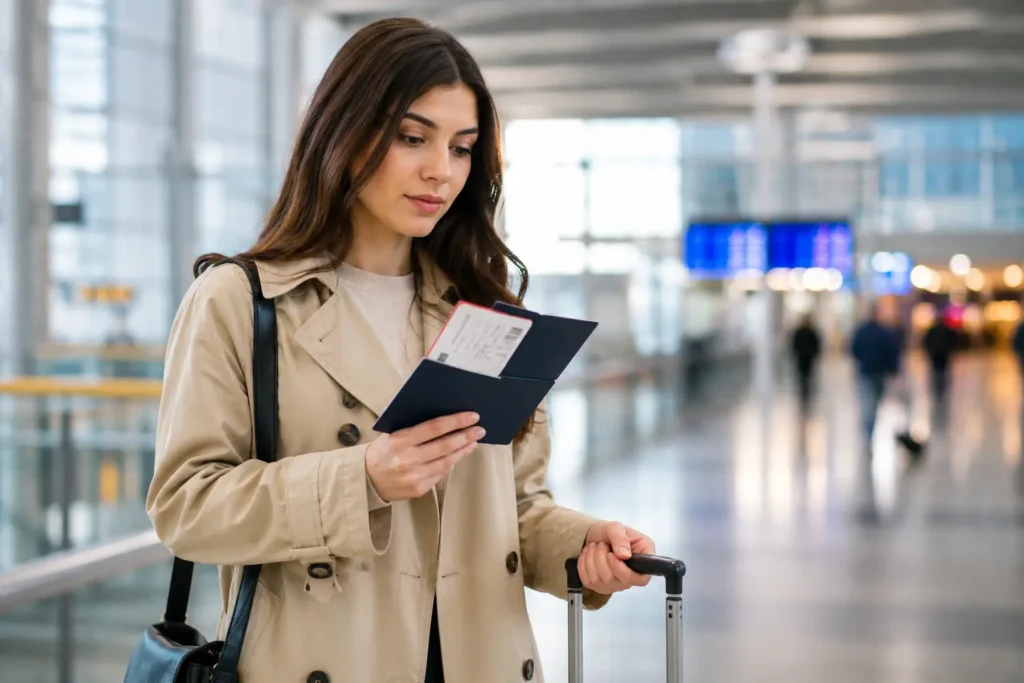
You need 4 core documents for every B1/B2 application: a valid passport, the DS-160 confirmation page, the fee payment receipt, and a passport photo. Consular officers may request extra evidence based on your individual circumstances. Missing a single core document, such as an unsigned passport, can force you to reschedule your entire interview appointment.
Required Documents for Every Applicant
- Passport valid for 6 months (180 days) beyond your intended stay, with 2 blank visa pages
- DS-160 confirmation page with barcode number, printed and unfolded
- MRV application fee payment receipt, matching the name on your passport
- One passport-style photo, 2 inches by 2 inches (5cm by 5cm), taken within 6 months
Additional Evidence That Strengthens Your Application
Additional documents include bank statements, an employment verification letter, and property deeds. These records demonstrate ties to your home country through named examples: a mortgage, a business registration, or school enrollment for your children. A letter of invitation is not required, though you may bring one if you choose.
Strong applications typically include 3 or more supporting documents beyond the core 4: a marriage certificate, a retirement account statement, a business registration certificate, a property deed, or a return flight itinerary. Officers weigh consistent, verifiable records higher than a single strong document.
How Family Members Apply Together
Each family member, including infants and children listed in your passport, needs a separate DS-160 form and a separate MRV fee payment. Parents complete the DS-160 on behalf of children under 16 years old, and most consulates waive the in-person interview for applicants under 14 and over 79. Bring proof of the family relationship, such as a birth certificate or marriage certificate, to support each dependent’s application.
How Much Does a US Tourist Visa Cost in 2026?
The B1/B2 tourist visa costs $185 for the MRV application fee, non-refundable regardless of outcome. Applicants from roughly 50 designated countries may also pay a refundable visa bond between $5,000 and $15,000 (approximately €4,600 to €13,800). A separate $250 Visa Integrity Fee became law in July 2025 but remained uncollected as of mid-2026, pending Department of Homeland Security implementation.
A new expedited interview option launched July 1, 2026, charging $750 for applicants who want an appointment within 10 business days at select posts. This fee applies on top of the standard $185 MRV fee, not instead of it.
Some nationalities also pay a reciprocity issuance fee on top of the MRV fee, based on what their home country charges US citizens for equivalent visas. Applicants from countries including India, Brazil, and Nigeria should check the State Department’s reciprocity tables by nationality before they budget for the total cost.
The table below summarizes the full application timeline, method, and difficulty level for each task.
| Task | Timing | Method | Difficulty |
|---|---|---|---|
| Complete Form DS-160 | 1 day | Online form (CEAC website) | Easy |
| Pay the MRV fee | 1 day | Bank transfer, cash, or online portal | Easy |
| Schedule the interview | 1 day to book; wait varies | Online appointment system | Moderate |
| Gather required documents | 3-7 days | In-person collection | Moderate |
| Attend the visa interview | 1 day | In person at the Embassy or Consulate | Moderate |
| Receive visa decision | 2-8 weeks after interview | Passport return by courier or pickup | Easy |
How to Prepare for Your US Visa Interview
To prepare for your US visa interview, organize your documents, rehearse concise answers, and arrive 15 minutes early. Consular officers spend an average of 2 to 3 minutes per applicant, so clear answers matter more than long explanations.
Common Interview Questions to Expect
- What is the purpose of your visit to the United States? Name your specific destination and activity.
- Who is sponsoring the costs of your trip? Name yourself, your employer, or a family member.
- How long do you plan to stay in the country? State an exact number of days.
- What ties connect you to your home country? Name your job, property, or family.
- What is your current employment status? State your job title and years of service.
What to Wear to Your Visa Interview
Wear business casual clothing to your interview: a collared shirt, slacks, or a modest dress. Avoid casual items such as flip-flops, ripped jeans, or graphic t-shirts, since consular officers form quick impressions during the short interview window. Comfortable, neat attire signals preparation without appearing overdressed.
Documents to Bring to the Interview
Bring 5 items to your interview: your passport, DS-160 confirmation page, fee receipt, photo, and supporting evidence of ties to your home country. Leave electronic devices in a secure location, since many embassies restrict them inside the building.
How Long Does US Tourist Visa Processing Take in 2026?
Standard B1/B2 visa processing takes 2 to 8 weeks after your interview, depending on the embassy’s workload. Some applicants enter administrative processing under Section 221(g), which adds 60 to 90 days. The $750 expedited option, described above, shortens the wait to schedule an interview but does not change post-interview processing time.
How to Renew a US Tourist Visa
To renew your visa, follow the same DS-160 and fee payment steps used for a first-time application. Some applicants qualify for an interview waiver if their prior visa expired within 12 months and they meet age and eligibility requirements. You must renew at a US Embassy or Consulate in your home country, not while inside the United States.
Why Do US Tourist Visa Applications Get Denied?
Most B1/B2 denials cite Section 214(b) of the Immigration and Nationality Act, meaning the officer found insufficient ties to your home country. A denial is not permanent, and you may reapply immediately with a new DS-160.
Common Reasons for Visa Refusal
- Weak financial documentation: inconsistent bank statements or unexplained large deposits
- Vague travel plans: no clear itinerary, destination, or return date
- Insufficient ties to home country: no stable job, property, or family obligations
- Prior immigration violations: a previous overstay or unauthorized employment
- Inconsistent answers: information on the DS-160 that contradicts interview responses
How to Reapply After a Section 214(b) Denial
To reapply after a Section 214(b) denial, submit a new DS-160 form and pay the $185 fee again. Strengthen your file with new evidence: a recent promotion, a property purchase, or updated bank statements. Reapplying with identical documents rarely changes the outcome.
What Happens After Your Tourist Visa Is Approved?
After approval, the embassy places the visa sticker inside your passport and returns it by courier or pickup within 3 to 7 business days. The visa lets you request entry at the border, but a Customs and Border Protection (CBP) officer makes the final admission decision at the port of entry.
How Customs and Border Protection (CBP) Processes Your Entry
A CBP officer reviews your passport, visa, and travel purpose when you arrive at the airport or land border. The officer sets your authorized length of stay, which may differ from your visa’s validity period. Answer questions clearly and carry proof of your return travel plans.
How to Read Your I-94 Arrival Record
Your Form I-94, Record of Arrival-Departure, shows the exact date you must leave the United States. Access your electronic I-94 record online through the CBP website after entry, since paper copies are no longer issued at most airports. Overstaying the date on your I-94 can block future visa approvals, even if your visa sticker remains valid for years.
Start Your US Tourist Visa Application Today
You now have every step needed to complete Form DS-160, pay the correct fees, and walk into your interview prepared. Strong ties to your home country, consistent documentation, and clear answers give you the best chance of approval on your first attempt. Visa rules and fee schedules change often, so verify current figures on your embassy’s website before you submit payment.
Visit immigrationwin.com for detailed guides on each visa category and country-specific application requirements.
Frequently Asked Questions

Michael Reynolds
Michael Reynolds leads ImmigrationWin’s immigration, visa, and global mobility content division. He specializes in researching immigration policies, visa requirements, application processes, and international relocation pathways for individuals, families, students, and professionals. With extensive experience analyzing immigration regulations and official government guidance, Michael brings a research-driven approach to complex immigration topics and changing visa policies. He is the primary author of ImmigrationWin’s visa guides, immigration resources, and country-specific content, helping readers better understand their options and make informed decisions about their international journey.
Related Posts