Japan Student Visa Guide: Master Your 2026 Application
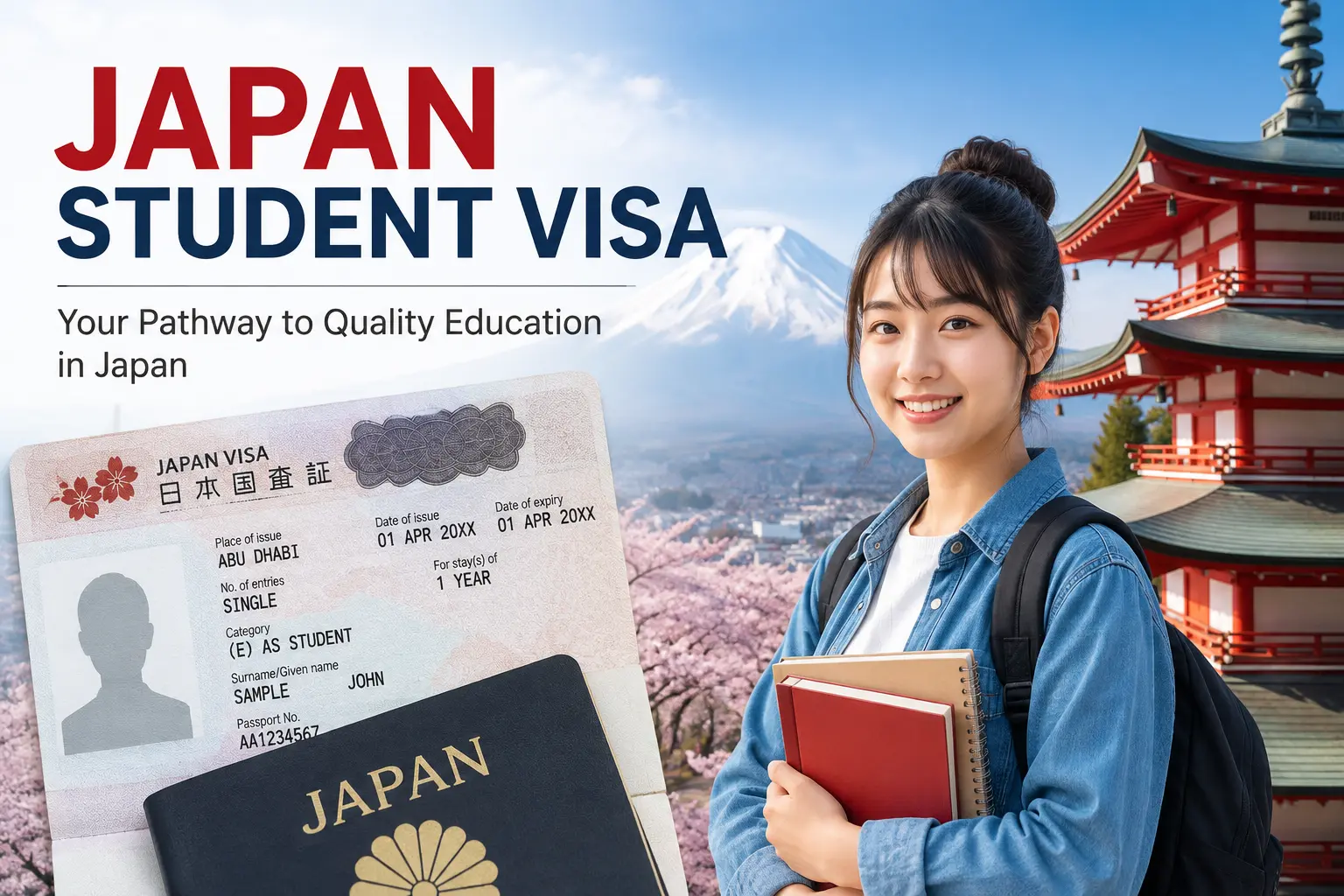
You must obtain a Japan student visa if you plan to study at an educational institution for more than 90 days. The Japanese government requires this legal document for all long-term international students who enter recognized schools.
| Task Name | Expected Timing | Official Method | Difficulty Level |
| School Enrollment Acceptance | 5 to 6 Months Before | Direct Application | Medium |
| COE Issuance by Ministry | 2 to 3 Months Before | School Sponsorship | High |
| Visa Application Form Submission | 1 to 2 Months Before | Consulate Visit | Low |
| Border Entry and Permit Issuance | Day of Arrival | Airport Inspection | Low |
What is the Japan Student Visa and Who Needs It?
The Japan student visa is an official endorsement that grants you legal entry for academic purposes. You require this status if you enroll in language schools, universities, or vocational colleges.
Legal Definitions and Government Oversight
The Ministry of Justice [MOJ] controls all long-term residence permits for foreign nationals. The Immigration Services Agency [ISA] processes your data to protect domestic border security. You must obey the Immigration Control and Refugee Recognition Act during your entire stay.
Schools must hold official designation from the Ministry of Education, Culture, Sports, Science and Technology [MEXT]. You cannot obtain this visa for unaccredited private lessons or casual short courses.
Length of Stay Regulations for Educational Tracks
The government grants visa durations that range from 6 months to 2 years. The regional immigration bureau determines your specific duration based on your course architecture. Language courses typically last up to 24 months, while university degrees receive 4-year allocations via renewals.
You must renew your residence status before the current permit expires. The authorities cancel your stay if you drop below the minimum course hours. You must maintain 90% classroom attendance to protect your legal status.
Core Japanese Student Visa Requirements for Global Applicants
You must satisfy specific japanese student visa requirements to receive approval from the consular officials. Gather your personal evidence early to avoid processing delays at the embassy.
| Document Name | Standard Dimension | Metric Equivalent |
| Passport Photograph | 2.0 x 2.0 Inches | 5.1 x 5.1 Centimeters |
| Visa Application Photo | 1.4 x 1.8 Inches | 3.5 x 4.5 Centimeters |
| Certificate Border Margin | 0.2 Inches | 0.5 Centimeters |
Financial Solvency and Bank Document Standards
You must prove that you possess 2,000,000 Yen [JPY], which equals roughly 14,000 US Dollars [USD], for each study year. Provide official bank statements from the past 3 months to verify these cash reserves.
Your financial sponsor must submit signed tax return documents and official letters of employment. The sponsor must demonstrate a stable annual income that exceeds specific regional thresholds. You can utilize personal bank accounts if you fund the education without external family sponsors. Review the specific visa application criteria to ensure your financial papers match official checklists.
Academic Credentials and Language Certifications
You must supply your highest graduation certificate, such as a high school diploma or a university bachelor degree. Submit official academic transcripts that detail all courses you completed over the past 3 years.
You must prove your language capabilities if you enroll in intensive track courses. Provide certificates from the Japanese Language Proficiency Test [JLPT] showing at least an N5 level score. Alternatively, show a certificate documenting 150 hours of structured study at recognized institutions like the Tokyo Language Academy.
How to Apply for Your Certificate of Eligibility [COE]
You cannot obtain your visa without a valid Certificate of Eligibility [COE]. The document proves that you fulfill the entry criteria established by the Ministry of Justice.
The Role of Educational Institutions in Tokyo
Your chosen school acts as your official proxy during the primary application phase. You send your personal documentation directly to the school administration office. School officials verify your papers before they submit the files to the regional immigration authority. You should select options from a directory of approved language schools to protect your application. The school staff communicates with the immigration officers on your behalf. They notify you immediately when the government approves your primary file.
Step-by-Step Document Submission to the Ministry of Justice
The school submits your dossier to the local bureau, such as the Tokyo Immigration Services Agency. Examiners review your family history, financial records, and academic intentions over several weeks.
The bureau prints the document on secure paper when they grant approval. Your school receives the physical certificate from the government office. The administration then dispatches the document to your international address via courier services like DHL or FedEx.
Finalizing the Japan Student Visa Application Form at Your Consulate
You must take your physical certificate to the nearest Japanese embassy or consulate general. This step transfers your domestic eligibility into an active international travel document.
Filling Out the Official Ministry of Foreign Affairs Paperwork
You must complete the japan student visa application form using black ink or digital input. Write your full name exactly as it appears on your passport data page. Do not leave empty spaces in the fields; write “None” if a question does not apply to you.
Attach 1 passport photograph that measures 1.4 by 1.8 inches (3.5 by 4.5 centimeters). The photograph must feature a plain white background without shadows or patterns. You must sign the second page of the form by hand to validate your entries.
Booking and Attending Your Visa Interview
You must schedule an appointment through the online portal of your local consular office. Bring your original passport, the completed form, and the physical certificate to your interview.
The consular officer will ask questions regarding your career goals and study choices. State your educational plans directly without mentioning any long-term immigration desires. You must demonstrate that your primary motivation involves returning home after graduation to apply your knowledge.
Understanding Japan Student Visa Processing Time and Costs
You must plan your calendar carefully because international processing involves strict government timelines. Delays occur if you submit incomplete files during peak application seasons.
Tracking Your Document Through the Bureaucracy
The total japan student visa processing time ranges from 3 to 5 months from the initial school submission. The Ministry of Justice requires 2 to 3 months to issue your initial certificate.
| Phase Title | Active Duration | Primary Responsible Agency |
| School Document Review | 14 to 30 Days | Target Educational Institution |
| COE Bureau Examination | 60 to 90 Days | Immigration Services Agency [ISA] |
| Consulate Visa Affixing | 5 to 7 Business Days | Ministry of Foreign Affairs [MOFA] |
The consular stage requires 5 to 7 business days after you submit your physical passport. You can track your passport status through the courier tracking numbers or embassy notification emails.
Complete Breakdown of Mandatory Processing Fees
The cost of student visa in japan includes multiple distinct fees that you must pay at different intervals. Your school charges an application screening fee that ranges from 20,000 to 30,000 JPY (140 to 210 USD).
The consular office collects a single-entry visa issuance fee of approximately 3,000 JPY (21 USD). You pay this specific fee in your local currency at the collection counter. Independent visa processing agencies may add small administrative surcharges if you use their collection services.
Working on a Student Visa in Japan: Legal Limits and Rules
You can engage in employment if you obtain official permission from the immigration authorities. This system allows you to support your living costs while you learn.
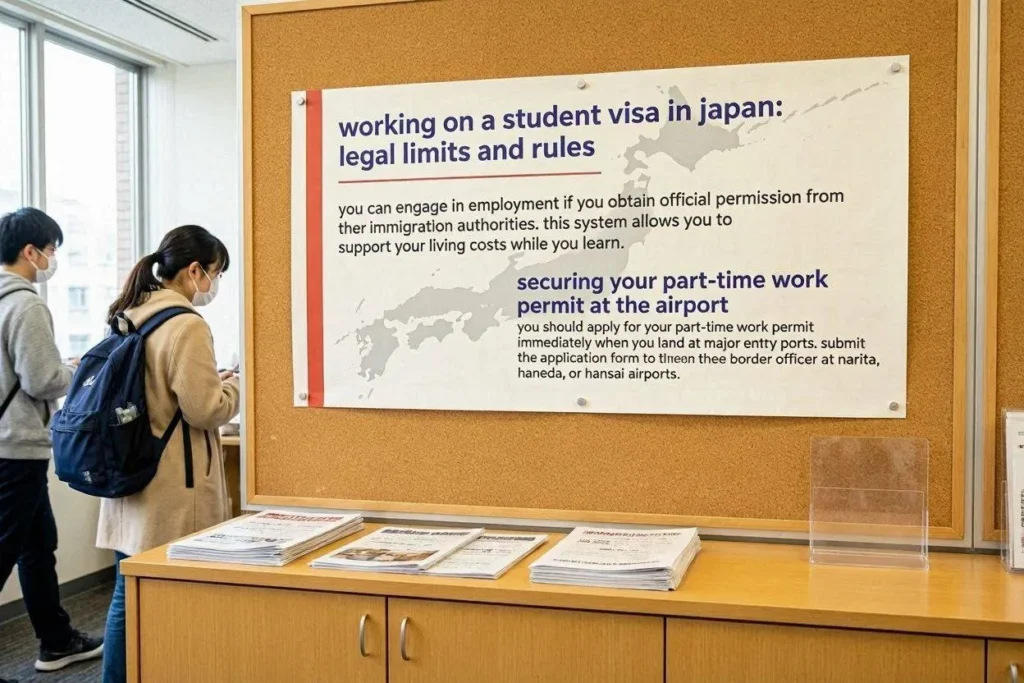
Securing Your Part-Time Work Permit at the Airport
You should apply for your part-time work permit immediately when you land at major entry ports. Submit the application form to the border officer at Narita, Haneda, or Kansai airports.
The officer stamps the permission directly onto the reverse side of your new resident card. This method avoids subsequent trips to local immigration offices. You receive your card immediately at the border kiosk.
Hourly Restrictions and Forbidden Employment Sectors
The permit allows working on a student visa in japan for a maximum of 28 hours per week. The government increases this limit to 8 hours per day during official school vacations.
You must avoid all adult entertainment establishments, such as bars, pachinko parlors, and nightclubs. You cannot work as a host, hostess, or cleaner in these restricted venues. Violating these labor rules results in heavy fines and immediate deportation from the country.
Transitioning from a Student Visa to Work Visa Japan Pathway
You can alter your legal status if you secure professional employment prior to your graduation date. This process allows you to establish a permanent professional career in the local market.
Changing Status at the Regional Immigration Bureau
You must execute a student visa to work visa japan transition before your academic enrollment ends. File the change of status paperwork at your regional immigration office.
You do not need to exit the country to complete this legal transition. The bureau changes your status from “Student” to “Engineer/Specialist in Humanities/International Services.” This transition allows you to enjoy full-time professional employment rights.
Document Checklist for Corporate Job Sponsorship
Your new employer must provide formal corporate registration papers and an official contract. You must submit your university graduation certificate or your vocational diploma. The corporate entity must prove they pay you a salary equal to or greater than a Japanese worker. Review the structured post-study work options to align your career strategy with the current immigration rules.
If you require professional support with your international relocation, contact Immigration Win today. Our consultants provide step-by-step guidance to ensure you satisfy all visa application criteria without errors.
Frequently Asked Questions

Michael Reynolds
Michael Reynolds leads ImmigrationWin’s immigration, visa, and global mobility content division. He specializes in researching immigration policies, visa requirements, application processes, and international relocation pathways for individuals, families, students, and professionals. With extensive experience analyzing immigration regulations and official government guidance, Michael brings a research-driven approach to complex immigration topics and changing visa policies. He is the primary author of ImmigrationWin’s visa guides, immigration resources, and country-specific content, helping readers better understand their options and make informed decisions about their international journey.
Related Posts