Germany Visa Types: Complete Guide for 2026 Relocation
Picking the right visa category is really the first real decision in any move to Germany. Get it wrong and you’re looking at delays, extra paperwork, or an outright rejection at the embassy. Get it right and the rest of the process is mostly just patience and paperwork.
What Are the Main Germany Visa Types for International Travelers?
The Federal Foreign Office works with three broad categories, and each one sets a hard limit on where you can go and how long you can stay.
Category A: Airport Transit Visa
This one’s narrow: it only lets you pass through the international transit zone of a German airport. You never actually enter the country. Travelers from certain non-exempt countries, Pakistan, India, and Ghana among them, need this document just to change planes.
Category C: Schengen Short Stay Visa
The workhorse visa for tourism, business trips, and short family visits. It caps you at 90 days within any rolling 180-day window across the Schengen area. You’ll apply through your local embassy or consulate, and the standard Schengen requirements apply here.
Category D: German National Visa
For anything longer than 90 days, students, workers, family members joining someone already living in Germany, this is the one. It’s also not the end of the road: think of it as a stepping stone. Once you arrive, you still need to convert it into a residence permit.
How to Choose the Correct Short Term Germany Visa Types
Match the visa to what you’re actually doing in Germany. None of the short-term options allow full-time work, so if a job is part of the plan, you’re in the wrong category.
Tourist Visas
For sightseeing, plain and simple. Munich, Berlin, Hamburg, wherever you want to go. You’ll need to show a real itinerary and confirmed hotel bookings, and you’re expected to cover your own costs.
Business Visas
Meetings, contract signings, trade shows, that sort of thing. You’ll need an invitation letter from a registered German company spelling out exactly why you’re coming.
Visitor Visas
For reuniting with family or friends already in Germany. Your host typically files a formal declaration of commitment at their local immigration office, which covers you financially if you can’t. You’ll also need to prove the relationship itself, birth certificates or family registers usually do it.
Which German National Visa Options Support Employment and Career Goals?
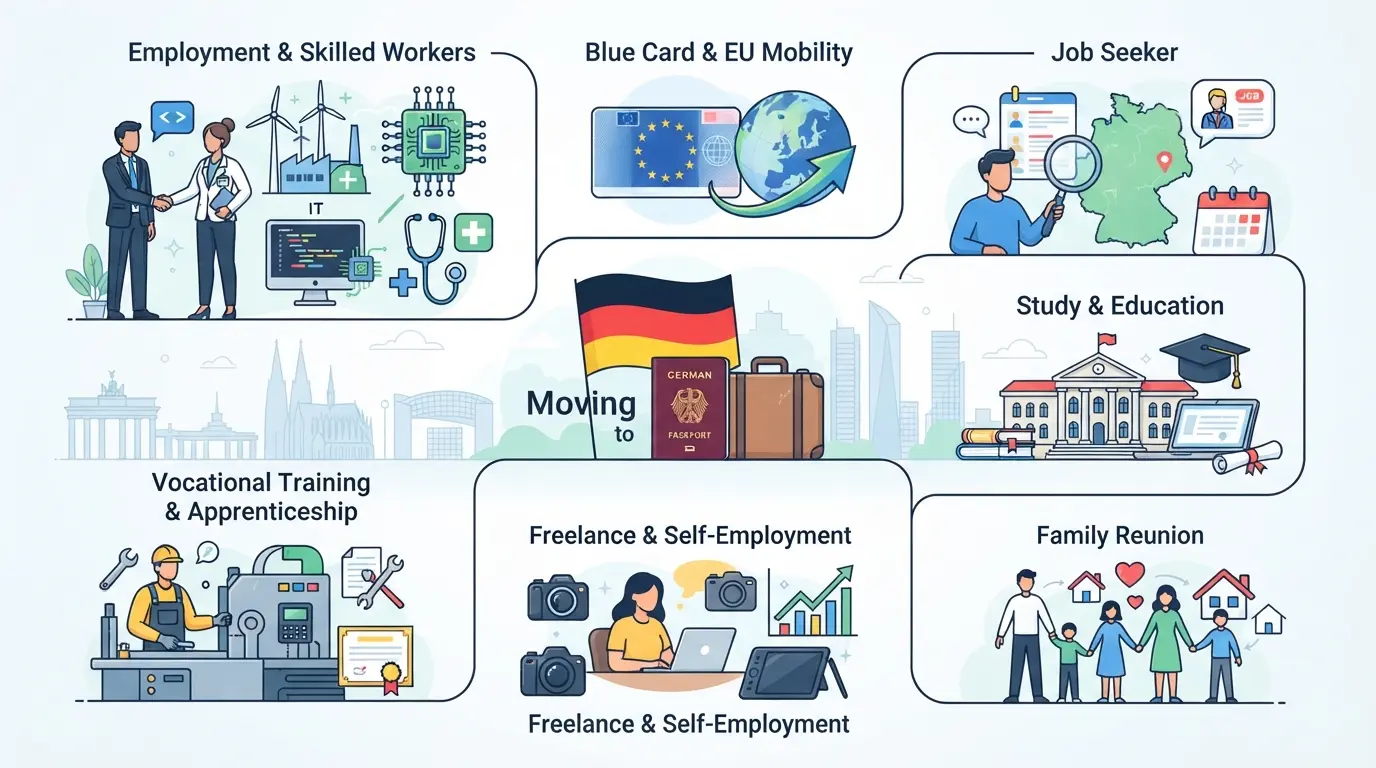
Germany’s Skilled Immigration Act opened up a few different lanes here, depending on how far along you are in your career.
Qualified Professionals Work Visa
This is for people with a recognized degree or vocational certificate and a job offer already lined up. The catch: the job has to actually match your training. A biology graduate can’t use this visa to take a marketing job.
EU Blue Card
Built for highly skilled workers, think IT specialists, doctors, engineers, with a job offer that clears a minimum salary threshold (lower for roles in short supply). It’s also one of the faster tracks to permanent settlement. With solid German, that wait drops to around 21 months.
Opportunity Card
A points-based system that flips the usual order: you get a year in Germany to find work first. Points come from your language skills, experience, age, and any existing ties to the country. While you’re job hunting, you can work part-time, up to 20 hours a week.
What Are the Educational Germany Visa Types Available for Students?
There are separate tracks depending on whether you’re learning the language, doing a full degree, or training for a trade.
Higher Education Student Visa
For anyone with a full admission letter from a recognized German university. You can work part-time, up to 140 full days a year, and you’ll need your diplomas and acceptance papers ready for the interview.
Language Course Visa
For intensive language programs, at least 18 hours of class a week, valid for up to 12 months. One important limit: you can’t convert this into a student visa once you’re already in the country.
Vocational Training Visa
Combines hands-on work at a German company with classroom instruction. It needs sign-off from the Federal Employment Agency, and you’ll need German at B1 level at minimum.
How Do Germany Family Reunion Visa Requirements Affect Relocation?
This track exists to keep families together, but it comes with real requirements around housing, finances, and language.
Spousal Relocation Visas
Your spouse needs a valid residence title or settlement permit already in hand. You, as the applicant, need A1-level German, enough to get by day to day while you settle in.
Minor Child Visas
Covers children under 18 joining a parent in Germany. The parents need legal custody and enough living space, the exact square-meter requirements vary by state. Kids over 16 face an extra hurdle: they need to show either strong language skills or clear signs they’ll integrate well.
How to Apply for Your Chosen Germany Visa Types Successfully
The process is a multi-step slog, and skipping even one step can sink the whole application.
Step 1: The Online Videx Form
Fill in your personal and travel history online. It spits out a barcode page that speeds things up at the counter. Print it on A4 paper (210mm by 297mm), nothing else works.
Step 2: Book Your Appointment
Use the Consular Services Portal or an approved external partner. Book at least three months out; embassies get slammed during peak season. You have to show up in person for biometrics.
Step 3: Assemble Your Documents
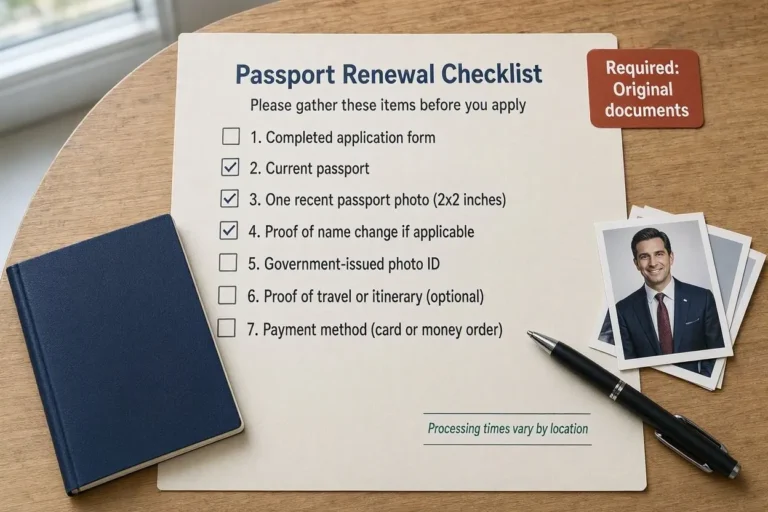
Follow the embassy’s checklist to the letter. That means two identical biometric photos (35mm by 45mm), a passport with at least two blank pages, and at least six months of remaining validity.
What Are the Financial and Insurance Requirements for Germany Visa Types?
Germany wants proof you can support yourself, which mostly comes down to two things: a blocked account and valid health insurance.
Blocked Accounts
Students, for example, typically need to deposit around 11,904 Euros for a one-year stay, with withdrawals capped near 992 Euros a month. Providers like Expatrio, Fintiba, and Coracle handle these accounts.
Health Insurance
Your policy needs to cover at least 30,000 Euros across the Schengen zone, including repatriation, emergency treatment, and hospital care. Bring the certificate to your interview.
Detailed Documentation Guidelines for Long Term National Visas
Bring originals plus two full sets of photocopies. Missing copies is one of the most common reasons applications get bounced. Anything not already in German needs a certified translation.
Your passport needs at least three months of validity beyond your planned residence permit expiration, and any damage, torn pages, a loose laminate, can sink the application on the spot. Make sure your signature matches across every document, and bring old expired passports too; they help show your travel history.
Understanding Visa Fees and Processing Timelines in 2026
Short-term Schengen visas run 90 Euros for adults; the long-term national visa is 75 Euros. Kids aged six to twelve pay a reduced 45 Euros, and children under six pay nothing, along with certain research fellows.
Fees are paid in local currency or through approved online channels, and they’re not refunded if your application gets rejected. Processing runs anywhere from about two weeks for a short visit to as long as twelve weeks for work permits.
Navigating the German Job Market and Employment Regulations
The Skilled Immigration Act was built to ease labor shortages, especially in IT, mechanical engineering, and construction. If your degree is foreign, check it against the Anabin database to see how it stacks up against German standards.
Before the embassy issues a work permit, the Federal Employment Agency has to sign off on your contract, confirming your working conditions match German labor law and that you’re being paid the same as a German employee in the same role. It’s meant to stop wage undercutting.
The Role of Local Immigration Offices After Your Arrival
Landing with a national visa is only step one. You’ve got fourteen days to register your address at the local registration office, which then hands you a certificate you’ll need for things like opening a bank account.
From there, you’ll book an appointment at the immigration office to convert your visa into an actual residence permit. Bring your lease, insurance proof, and biometric photos. The permit itself usually runs for the length of your job contract or study program.
Quick Reference Summary of Germany Visa Types
| Visa Classification | Primary Task Permitted | Processing Timing | Application Method | Difficulty Level |
| Airport Transit (A) | Pass through airport transit zone | 5 to 10 business days | In-person embassy submission | Low difficulty |
| Schengen Tourist (C) | Leisure travel and sightseeing | 15 calendar days | In-person via visa center | Medium difficulty |
| Schengen Business (C) | Attend corporate meetings | 10 to 15 calendar days | In-person via visa center | Medium difficulty |
| Skilled Worker (D) | Full-time local employment | 6 to 12 weeks | Consular Services Portal | High difficulty |
| EU Blue Card (D) | High-salaried professional work | 4 to 8 weeks | Consular Services Portal | High difficulty |
| Opportunity Card (D) | Local job seeking and trial work | 4 to 6 weeks | In-person embassy submission | High difficulty |
| University Student (D) | Pursue higher education degree | 25 to 40 calendar days | Consular Services Portal | Medium difficulty |
Concluding Steps for Your Immigration Process
Picking the right track is really the foundation everything else gets built on. From there it’s mostly about staying organized: the right documents, the right timing, and following the consulate’s checklist closely. If you want help navigating the details, a consultation with a work permit advisor can save you from some of the more common missteps, especially around eligibility and paperwork for the Opportunity Card or Blue Card routes.
Frequently Asked Questions

Michael Reynolds
Michael Reynolds leads ImmigrationWin’s immigration, visa, and global mobility content division. He specializes in researching immigration policies, visa requirements, application processes, and international relocation pathways for individuals, families, students, and professionals. With extensive experience analyzing immigration regulations and official government guidance, Michael brings a research-driven approach to complex immigration topics and changing visa policies. He is the primary author of ImmigrationWin’s visa guides, immigration resources, and country-specific content, helping readers better understand their options and make informed decisions about their international journey.
Related Posts